The Long Road To a Netflix–Warner Bros Deal: From AT&T’s Time Warner Failure to Paramount’s Hostile Bid
Written by Nik Mohan
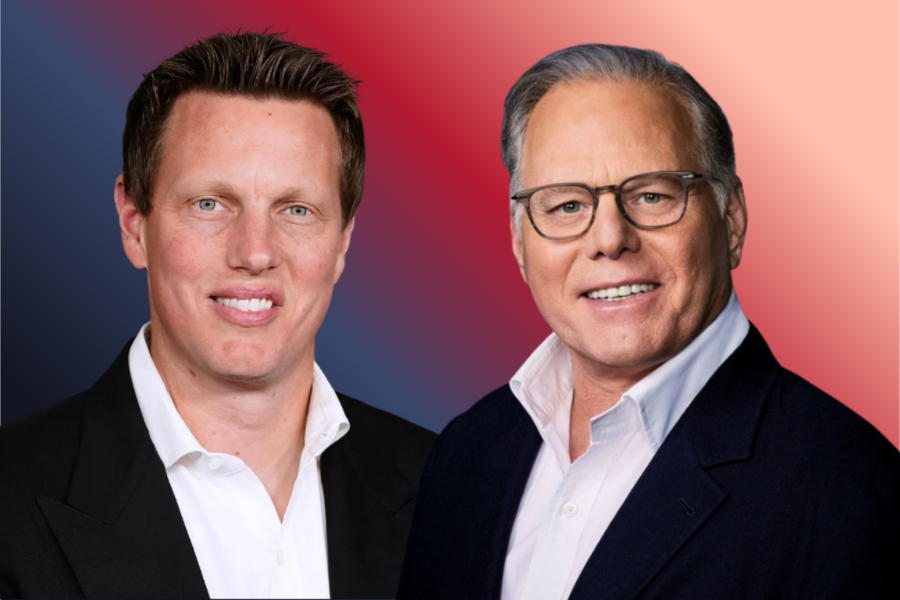
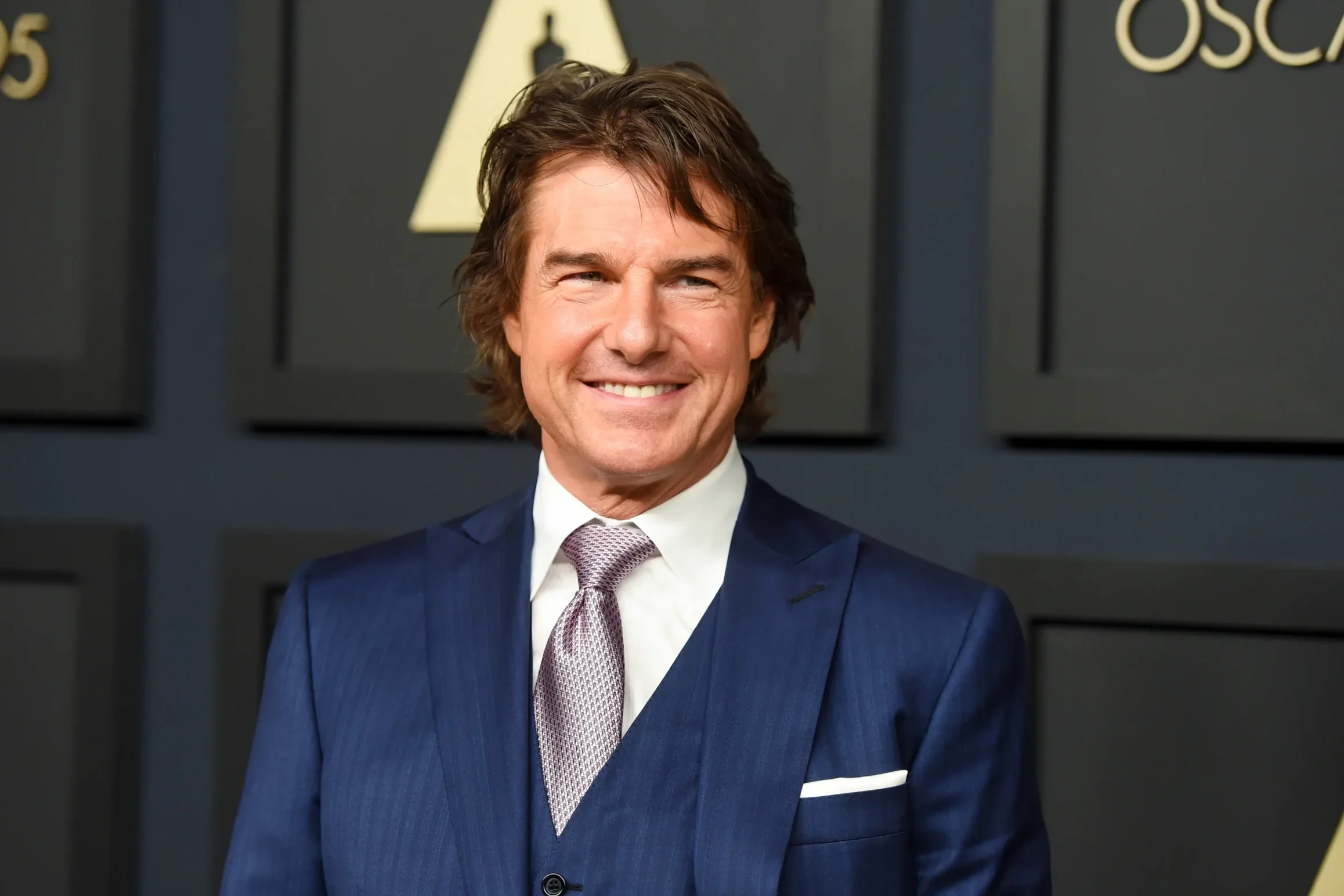
LEFT: David Ellison (Chairman and CEO of Paramount Skydance).
RIGHT: David Zaslav (CEO and President of Warner Bros. Discovery).
Courtesy of Getty.
What people are calling a “Warner Bros/Netflix merger” is, in its current form, a proposed acquisition: Netflix has agreed to buy Warner Bros. Discovery’s [WBD] Studios & Streaming business (including the Warner Bros studio and HBO/HBO Max), while WBD’s legacy cable networks are slated to be separated/spun out. Days after that announcement, Paramount Skydance (led by David Ellison) went hostile with a rival bid for all of WBD, trying to blow up or outbid the Netflix deal.
But to completely grasp how Warner Bros. reached this stage in its history, we must circle back to AT&T’s original Time Warner takeover, through the WarnerMedia–Discovery combination that created today’s WBD, and the latest Netflix agreement that resulted in an Ellison-led hostile challenge.
The AT&T–Time Warner merger: vertical integration as a strategy (2016–2019)
In October 2016, AT&T announced it would buy Time Warner (HBO, Warner Bros., Turner networks) in an $80B+ deal (often reported around $85B including debt), aiming to pair a massive content engine with telecom distribution. The deal became a landmark test of U.S. antitrust scrutiny for “vertical” mergers (companies in different parts of the supply chain).
The deal that ultimately closed valued the acquisition at about $105.8 billion total transaction value, which adds the mentioned $85 billion to $21.3 billion of assumed Time Warner debt that AT&T agreed to take on as part of the transaction
The U.S. Department of Justice sued to block the deal, but in June 2018 a federal judge allowed it to proceed; the merger closed June 14, 2018. The government appealed, and in February 2019 it lost again when the D.C. Circuit upheld the ruling; shortly after, DOJ said it would not pursue further appeals.
Even as AT&T absorbed Time Warner and rebranded it as WarnerMedia, the competitive environment shifted fast: Netflix scaled globally, Disney launched Disney+, and the economics of streaming turned harsher (high content spend and rising financing costs). This set the stage for AT&T’s pivot.
After acquiring Time Warner, AT&T pushed Warner Bros. into building its own streaming service: HBO Max. Launching the platform required billions in new spending on technology, marketing, and exclusive content (even as AT&T accumulated the Time Warner debt). To fund the streaming push, AT&T continued borrowing, driving its total debt past $180 billion at its peak, which strained both its telecom business and WarnerMedia. The pressure to feed HBO Max with exclusive content undermined traditional theatrical and licensing revenue, and the mounting debt ultimately made WarnerMedia untenable inside AT&T—leading directly to its spin-off and merger with Discovery.
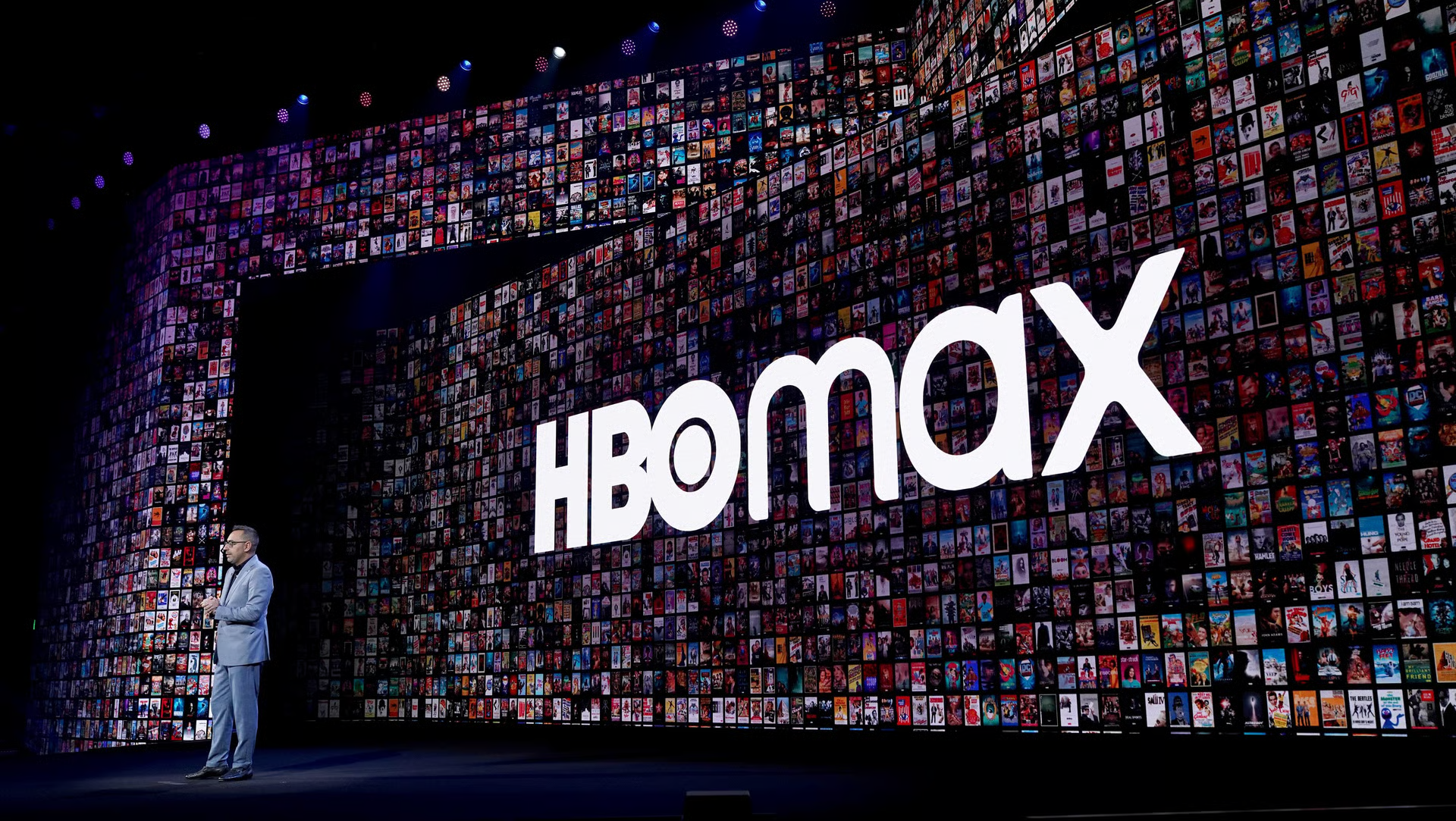
Courtesy of Getty.
AT&T exits: the WarnerMedia–Discovery deal creates WBD (2021–2022)
On May 17, 2021, AT&T announced a plan to spin off WarnerMedia and merge it with Discovery in a Reverse Morris Trust structure. AT&T would receive about $43 billion (cash, debt securities, and debt retained at WarnerMedia), and AT&T shareholders would own 71% of the new company (Discovery shareholders 29%).
The merger closed April 8, 2022, forming Warner Bros. Discovery (WBD). From day one, the combined company carried an enormous debt load—Reuters described it as about $55 billion, a constraint that would shape nearly every strategic decision that followed.
As part of the deal, David Zaslav, Discovery’s CEO, was installed as head of WBD. Zaslav was not brought in to outspend Netflix or Disney; he was brought in to cut costs, generate cash, and service debt. Almost immediately after taking control, Zaslav moved to dismantle AT&T-era strategies: he canceled projects, shut down services, slashed executive ranks, and prioritized financial discipline over growth optics. His arrival marked the end of Warner Bros. as a studio chasing expansion and the beginning of WBD as a company focused on balance-sheet repair, and eventual asset separation.
The Zaslav era: cost cuts, write-offs, and a reset of what “winning” meant (2022–2024)
David Zaslav’s message was that WBD would not try to “win the spending war” in streaming the way the biggest players could; instead, it would prioritize cash generation, debt paydown, and disciplined content investment.
Within weeks, WBD moved to shut down CNN+ (which had launched just before the merger closed), signaling an aggressive willingness to reverse prior leadership’s gambles.
Then came restructurings and content triage:
WBD projected up to $2.5B in restructuring/content-related charges in 2022 tied to scrapped projects (the “Batgirl” cancellation became emblematic as a “tax write-off”), plus layoffs and facility consolidation costs.
By late 2022, WBD said expected content write-offs could reach up to $3.5B.
In mid-2022, WBD laid out plans to combine HBO Max and Discovery+ offerings—another signal that the company was trying to reach sustainable streaming economics.
As cord-cutting accelerated and affiliate-fee and ad assumptions weakened, WBD took a major hit:
In August 2024, WBD recorded a $9.1B write-down/impairment tied to the devaluation of its TV network assets amid uncertainty around distribution fees, sports rights renewals, and the outlook for linear networks.
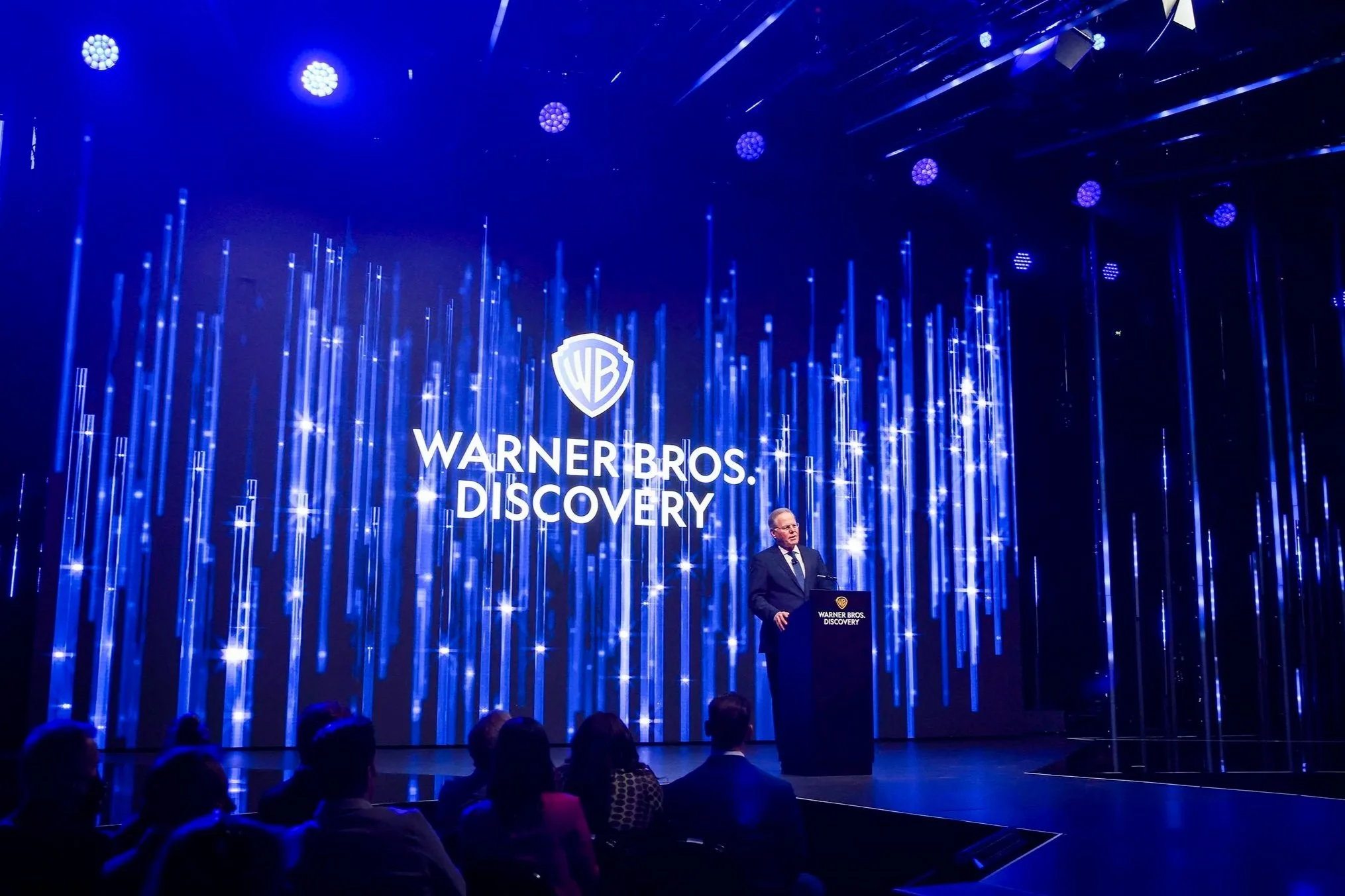
Courtesy of Warner Bros. Discovery.
Credit and earnings coverage mattered because of that inherited leverage. By mid-2024, S&P noted WBD had reduced gross debt materially from the merger peak (still large, but improving), aided by free cash flow generation.
David Ellison’s interest in acquiring Warner Bros. emerged gradually as Warner Bros. Discovery’s instability became public and sustained. Reporting in late 2023 and early 2024 first linked Ellison—through Skydance Media—to exploratory conversations about large-scale studio consolidation, as WBD’s stock lagged and its debt burden remained heavy following the April 2022 WarnerMedia–Discovery merger. By mid-2024, after WBD took a multibillion-dollar impairment charge tied to its linear TV assets and openly discussed restructuring and potential separations, industry reporting indicated that Ellison had begun seriously evaluating Warner Bros. as a takeover target rather than a passive partner.
Executive pay becomes a lightning rod: “failing company, thriving CEO”
Zaslav’s compensation repeatedly became a public talking point because it stayed extraordinarily high even as WBD’s share price and linear-network outlook drew criticism and the company cut costs.
Reputable disclosures and trade coverage put his total compensation at:
$49.7M for 2023 (reported April 2024), up sharply year over year.
$51.9M for 2024 (which Top Film reported April 2025).
And WBD also amended Zaslav’s incentive structure in ways that increased potential equity awards tied to performance metrics—reported contemporaneously as the company pursued deep savings.
That contrast—tightening budgets and cutting projects while awarding top-of-market executive pay—fed a narrative that WBD was being managed for financial engineering (cash flow, debt, and accounting resets) rather than creative momentum, even though management argued the discipline was necessary given leverage and industry economics.
Break-up plan, layoffs, and “strategic alternatives” (2025 and onward)
In June 2025, WBD formally announced plans to separate into two publicly traded companies:
Streaming & Studios (Warner Bros Television/Motion Picture Group, DC Studios, HBO, HBO Max, etc.)
Global Networks (the linear TV portfolio)
WBD framed this as a way to let each business pursue its own capital structure and strategy in a market where streaming and cable face very different growth and valuation dynamics.
Even with the separation plan, WBD kept cutting: Reuters reported 10% layoffs in the motion picture group as part of pre-split restructuring in July 2025.
By late 2025, Reuters reported Zaslav said an “active process” was underway regarding a sale—indicating the split plan had not removed M&A pressure.
December 2025: Netflix agrees to buy WBD’s Studios & Streaming assets
On December 5, 2025, Netflix announced an agreement to acquire WBD’s Studios & Streaming business (post-separation), while WBD’s networks business would be spun off. Reuters described the agreement as a $72B equity value / $82.7B enterprise value transaction (figures vary by framing: equity vs enterprise value and included debt).
Strategically, the rationale is straightforward:
Netflix would gain Warner Bros’ film/TV engines and deep IP (DC, Harry Potter, etc.), plus HBO/HBO Max, potentially creating the most powerful subscription streaming bundle on earth.
WBD would crystallize value for Studios & Streaming while shedding (or isolating) the declining linear-network drag.
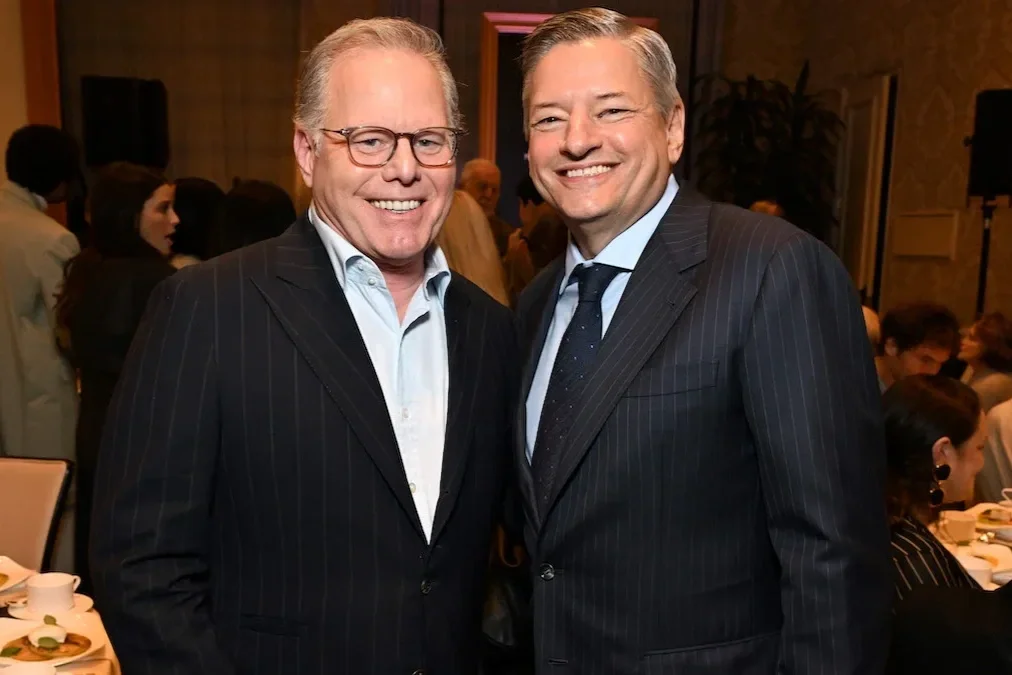
David Zaslav, CEO, Warner Bros. Discovery and Ted Sarandos, CEO, Netflix attend the AFI Awards on Feb. 6, 2025 in Los Angeles. Courtesy of Michael Kovac/Getty Images.
The deal triggered rapid legal and regulatory pushback:
Reuters reported a consumer class action seeking to block the acquisition, arguing it would reduce competition in subscription streaming.
Reuters also reported skepticism from antitrust experts about Netflix’s arguments (including comparisons to YouTube as a competitive constraint), noting merger reviews often hinge on narrowly defined markets and internal documents.
David Ellison “gets back into talks” by going hostile: Paramount Skydance’s rival bid
Just three days after the Netflix agreement became public, the situation escalated dramatically.
On December 8, 2025, Paramount Skydance, led by David Ellison and backed by the Ellison family plus a financing consortium (three Middle Eastern sovereign wealth funds: the Qatari sovereign wealth fund, the Saudi sovereign wealth fund, L'imad Holding Co—owned by the government of Abu Dhabi) launched a hostile bid for all of Warner Bros. Discovery, not just the studio/streaming unit. Multiple outlets reported the offer at roughly $108B enterprise value (and about $30/share framing in some coverage), directly challenging the Netflix transaction.
Reuters reported Paramount said it pursued Zaslav and WBD for months prior to the studios’ talks with Netflix, and felt “ghosted.” Paramount then took its bid straight to shareholders.
The Ellison-led bid includes complex financing, including reported participation from sovereign wealth funds and other investors—an element that became central to WBD board concerns and to the public debate over national security and deal certainty.
Paramount’s pitch is essentially:
“More cash, faster close, fewer antitrust issues than Netflix” (since Netflix + HBO Max is a much tighter streaming consolidation).
Netflix’s counter is:“Cleaner carve-out and a more executable structure,” with different regulatory risk tradeoffs.
Once WBD agreed with Netflix, any superior proposal triggers a defined process: the board must evaluate, and termination fees/break-up protections can shape what bidders are willing to do. Coverage indicates that this legal/structural reality is part of why Ellison’s team escalated publicly rather than continuing quiet talks.
The deeper story underneath the headlines: why WBD became “for sale” again
Across this seven-year arc, three forces recur:
Debt and capital costs
WBD inherited enormous leverage at birth, and even meaningful paydown left it vulnerable to rising rates and any downturn in advertising or theatrical performance. That makes “strategic optionality” (splits, asset sales, mergers) more attractive—and sometimes necessary.Linear networks’ structural decline
The 2024 impairment was a public marker of something investors had been discounting for years: as cable economics erode, the networks segment becomes a melting ice cube unless stabilized by new distribution models.Streaming economics maturing
The streaming market moved from land-grab to profitability. WBD tried to pivot toward cash flow and bundling/consolidation; Netflix is now trying to buy scarcity (prestige brands + IP + studio capacity) while arguing scale will improve consumer value… an argument regulators may or may not accept.
What happens next
As of Saturday, December 13, 2025, the “Warner Bros/Netflix merger” has become an active contest:
Netflix’s agreement faces global antitrust scrutiny and private litigation.
Paramount Skydance’s hostile bid forces WBD’s board to assess whether it is a “superior proposal,” weighing price vs certainty vs regulatory/financing risk.
Meanwhile, the political temperature around media consolidation (especially involving major news assets) adds additional uncertainty to the process in a way that is unusual for typical M&A review cycles.
The fallout and what a Netflix-Warner Bros. merger means for Hollywood
The proposed Netflix acquisition of Warner Bros.’ studio and streaming assets is widely seen by critics as a potential death blow to cinema as a cultural institution, not because movies will stop being made, but because the theatrical-first mindset would finally be subordinated to algorithmic streaming economics. Netflix’s business model is built on subscriber retention, data optimization, and rapid content turnover—not on long theatrical windows, box-office risk-taking, or the slow burn of audience discovery that has historically defined great cinema.
The collapse of Warner Bros as one of the last major studios still capable of mounting mid-budget adult dramas and large-scale theatrical franchises, into Netflix risks accelerating the shift toward films designed primarily for home viewing, shortened runs, and performance judged by opaque internal metrics rather than public cultural impact.
In this scenario, theaters become marketing tools rather than destinations, filmmakers are pressured to optimize for completion rates instead of artistic ambition, and cinema as a shared public experience risks becoming a byproduct of a streaming pipeline rather than the industry’s creative core—in which it was founded.
The Directors Guild of America (DGA), led by Christopher Nolan, has pushed back strongly against the Netflix–Warner Bros. deal, warning that it would accelerate consolidation and further weaken directors’ creative leverage and residuals.
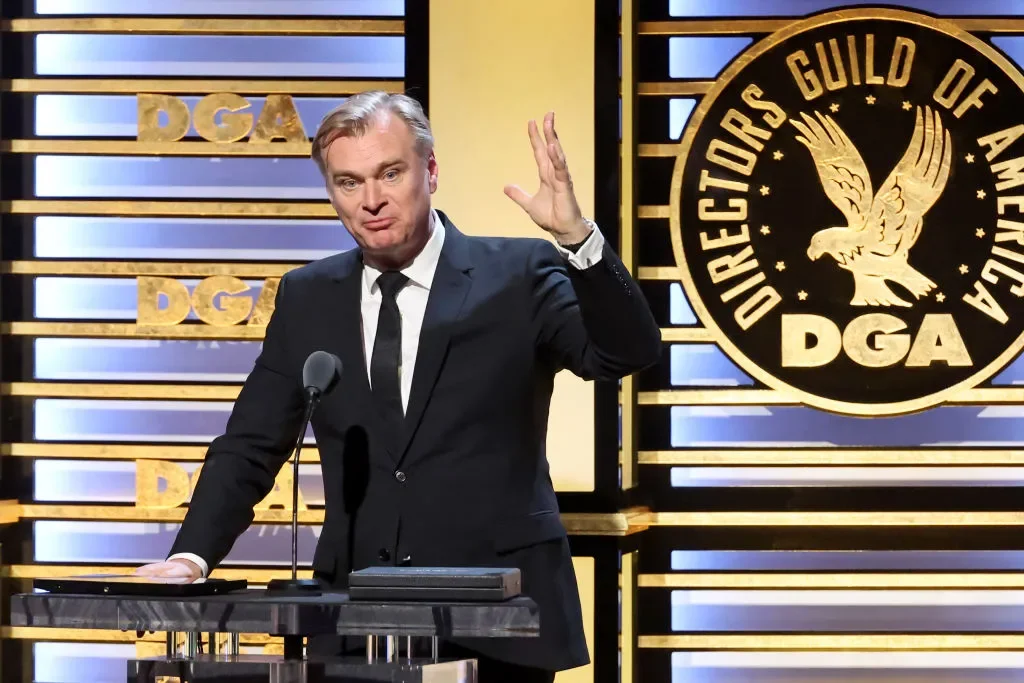
Courtesy of Getty Images for DGA.
The guild has argued that folding Warner Bros. into Netflix would erode theatrical commitments and replace transparent box-office measures with opaque streaming metrics. In response, the DGA has been lobbying regulators and coordinating with other Hollywood unions, urging heightened antitrust scrutiny and framing the merger as a threat not just to competition, but to creative labor and the future of cinema itself.
Below is a consolidated list of the reputable sources and reporting outlets that underpin the facts, timelines, figures, and characterizations used throughout the article.
Reuters / Bloombery – Primary source throughout
AT&T–Time Warner merger approval and appeal
WarnerMedia–Discovery merger structure and debt load
WBD restructuring, write-downs, layoffs
Netflix acquisition terms and antitrust concerns
David Ellison / Skydance hostile bid details
Saudi sovereign wealth fund discussions
Labor guild reactions and regulatory pressure
The Wall Street Journal
AT&T’s strategic rationale and debt exposure
HBO Max rollout and internal WarnerMedia tensions
Executive compensation and shareholder reactions
Bloomberg
WBD debt refinancing and balance-sheet analysis
Streaming economics and consolidation trends
Skydance financing discussions and Ellison strategy
Variety
Warner Bros. cancellations, theatrical vs streaming strategy
Zaslav leadership approach and studio culture changes
DGA and guild responses
The Hollywood Reporter / Top Film Magazine
CNN+ shutdown and Warner Bros. internal restructuring
Filmmaker backlash and labor concerns
Ellison’s positioning as a theatrical-first alternative
Deadline Hollywood
Executive compensation reporting
Behind-the-scenes deal negotiations
Industry reaction to the Netflix acquisition
U.S. Congressional Research Service (CRS)
AT&T–Time Warner transaction value and assumed debt
Department of Justice / Federal Court Filings
Antitrust rulings and legal precedents from the AT&T–Time Warner case
Directors Guild of America (DGA)
Public statements and regulatory outreach opposing further consolidation
Concerns over residuals, theatrical commitments, and streaming opacity
SEC Filings (AT&T, Warner Bros. Discovery)
Executive compensation (David Zaslav)
Debt disclosures and restructuring charges
Impairment write-downs
Keep up with Top Film for every update on the Netflix-Warner Bros. merger.
TRENDING NEWS