Running Toward Change: Producer Alex Schmider Talks ‘Kick’ and Crafting LGBTQ+ Narratives
Interview by Nik Mohan | Written by Alexandra Paszek & Nik Mohan
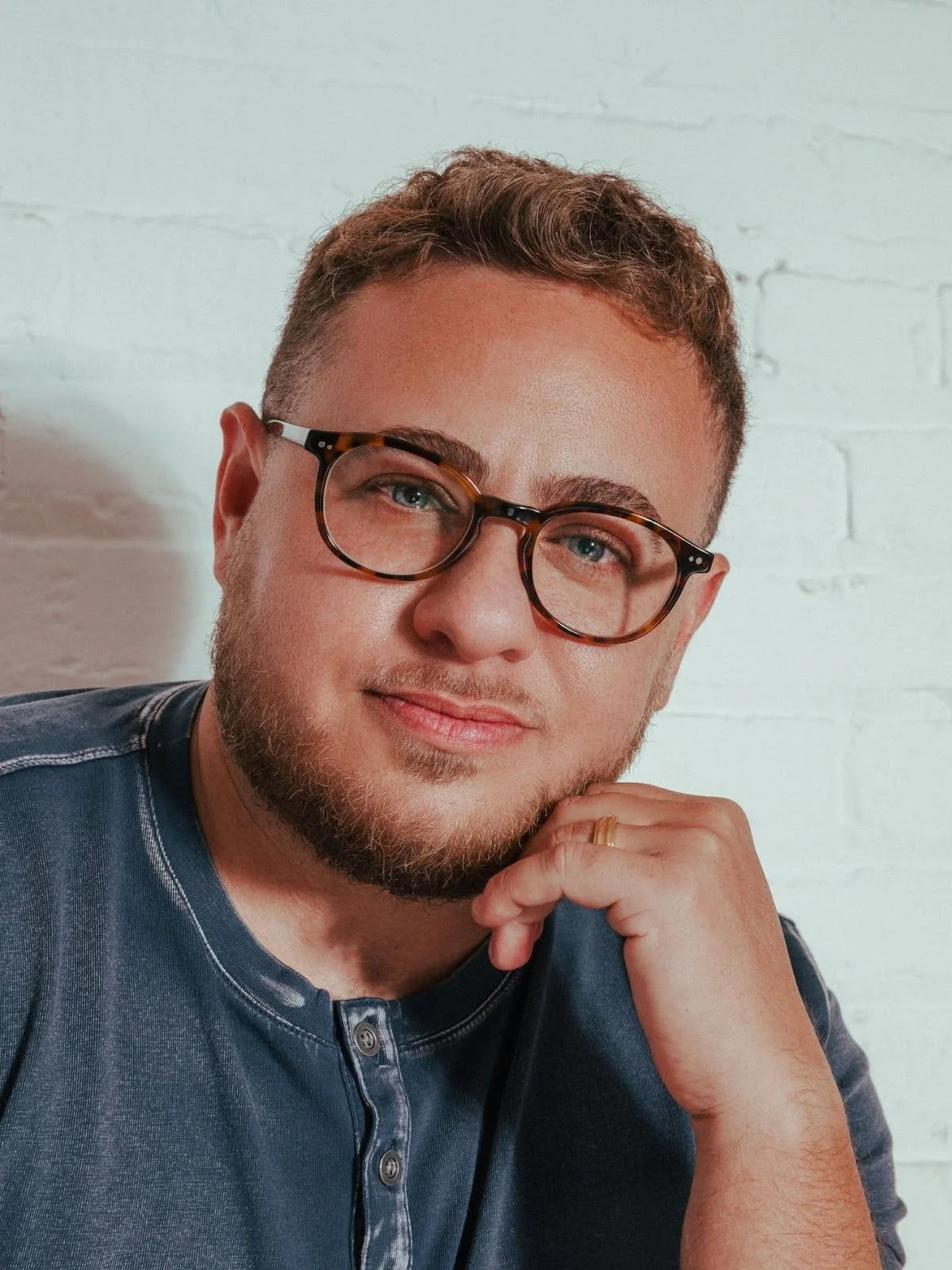
Courtesy of WYNNE NEILLY.
Producer Alex Schmider was recently at DOC NYC for PRO Pitch Day with a new documentary titled ‘Kick.’ The project follows America’s fastest 1500m runner Nikki Hiltz, and their journey toward the Olympics as a transgender nonbinary athlete.
Schmider, the OUT100 honoree, joined Top Film in a conversation about the project, his work with GLAAD, and authentically crafting LGBTQ+ storytelling in media.
You return to DOC NYC as a recognized member of their 40-Under-40 from only a couple years ago. How are you feeling after just recently coming off the festival?
Alex: It was incredible to be at doc NYC, especially during these times when documentaries serve, I think, an even more important role in shaping our culture and how we get to know people. The energy of my fellow documentarians and also the team behind ‘Kick’ was just exhilarating. Um, and our pitch went over in ways that we could only dream of. Julia, the director, and I actually met at doc NYC two years ago in the very same room that we pitched. So full circle moment. Coming back with the project was really, really incredible.
You’ve been working in this industry for roughly a decade, and I know you’re not doing this for the accolades, but being on the OUT100 this year must feel somewhat gratifying. Did it kind of make you realize that your work is indeed being seen and that it is having a positive impact on audiences?
Alex: To your point, no one does this for the recognition. It is too hard of work for that. But to know that my work is recognized and appreciated by the community that I'm a part of is especially meaningful. And to be on a list with people I so deeply respect and admire, like Representative Sarah McBride, Precious Brady Davis, River Gallo, who's an incredible filmmaker, um, to be in such company is also, um, just deeply in honor. And I it helps to continue the energy to keep going.
You’ve worked on LGBTQ sports documentaries before. When you evaluate a potential project, what makes you think, “This story needs to be told—and I need to help tell it?” — especially in reference to Nikki Hiltz’s story?
Alex: Thank you for that question. I don't know that I've ever been asked that, but usually, uh, I will meet a storyteller or filmmaker, and I will immediately be drawn to the project because I think it speaks to something very human and universal. It is not just for our community. It is for reaching outside of us and introducing people worlds that audiences may not be personally familiar with. In the case of Julia, I met her, um, through actually, our producer, Zackary Drucker, who said, you both have to meet at doc NYC. She was there, she's connecting us. And I heard about this project specifically. And what struck me about Julia's approach was that she has had this relationship with Nikki Hiltz for a number of years that has created this intimacy and access into Nikki's story with a real desire to tell Nikki's story first, and then the context it comes in, but it's really character driven, and those are always the stories that I'm drawn to, because the more that we can relate to a character or a person, the more we can relate to their experience and their life and their world outside.
Sometimes it feels like important projects are out there, but they might not be receiving the marketing budgets or media spotlight. That seems like a gap where independent filmmakers have been forming new solutions or rather innovate ways of propping up their own original, creative stories. Would you say that authenticity when creating stories is perhaps the most vital part of filmmaking right now?
Alex: Yes, I think authenticity of LGBTQ stories has come a long way, and that's largely because of authorship and ownership of those stories being from inside the community. So with directors, producers, editors, colorists, just surrounding projects with people who have that lived experience. Um, so I'm very happy to see more quantity in a lot of ways. I think the quality of our stories, especially as more people want to share those, um, is hopefully going to trend in the direction of more LGBTQ people grown up living their lives. What it means to have come out or shared your gender history a long time ago, and what does it look like to be yourself and in your world? And and who occupies that space with you?
From my understanding, growing up, you didn’t see any stories about trans people living their lives, and how the absence of that representation made it difficult for you to envision your own future. Of course, you then saw ‘Boys Don’t Cry’ which had a profound impact on you. Would you say that film is the most impactful way of reaching those who feel unrepresented and unvalued?
Alex: I feel like film is one of the most powerful ways to connect people to a story, because when you're going to a theater or everyone is watching it on a screen, TV can be segmented a little more, like you can watch an episode and then not unless it's coming out in weekly series, but a film. Typically, it's going to come out at one point and provides an opportunity for people to talk about it, have conversations like go together, um, and be in dialogue. So I feel like it is one of the most powerful and impactful mediums, um, to not only reach people to, but to connect them as well.
Speaking of ‘Boys Don’t Cry,’ you were once screening ‘Changing the Game,’ and you actually saw Hilary Swank in the lobby—who actually attended the screening—and she said to you that she was moved by the film. How did that make you feel?
Alex: That is one of the most special moments that I've had in my career so far. Because to your point, when I saw ‘Boys Don't Cry’ at twelve, that was both what allowed me to see myself for the first time in Hilary Swank's portrayal of Brandon Teena, and also delayed my own self acceptance for a decade because that for anyone who knows the film, it's not an easy watch. And so when I realized after a state of paralysis and shock that Hilary Swank was coming up to me, she had just watched a screening of the film and shared how moving it was for her. I was able to share back, artist to artist, how her work had impacted me and my life, and that changing the game wouldn't be a film had she not been the artist she is, and also talked about her portrayal of Brandon Teena and the respectful way that she did so that remains one of the most, uh, resonant points in my career, because to have an artist you respect share that something you've created has moved them, there's not much higher you can get in that way. Um, and we stayed in touch a little after that. And, and just to know that, um, someone I looked up to for quite some time has, has some connection to the work that I do. It really fuels me to continue.
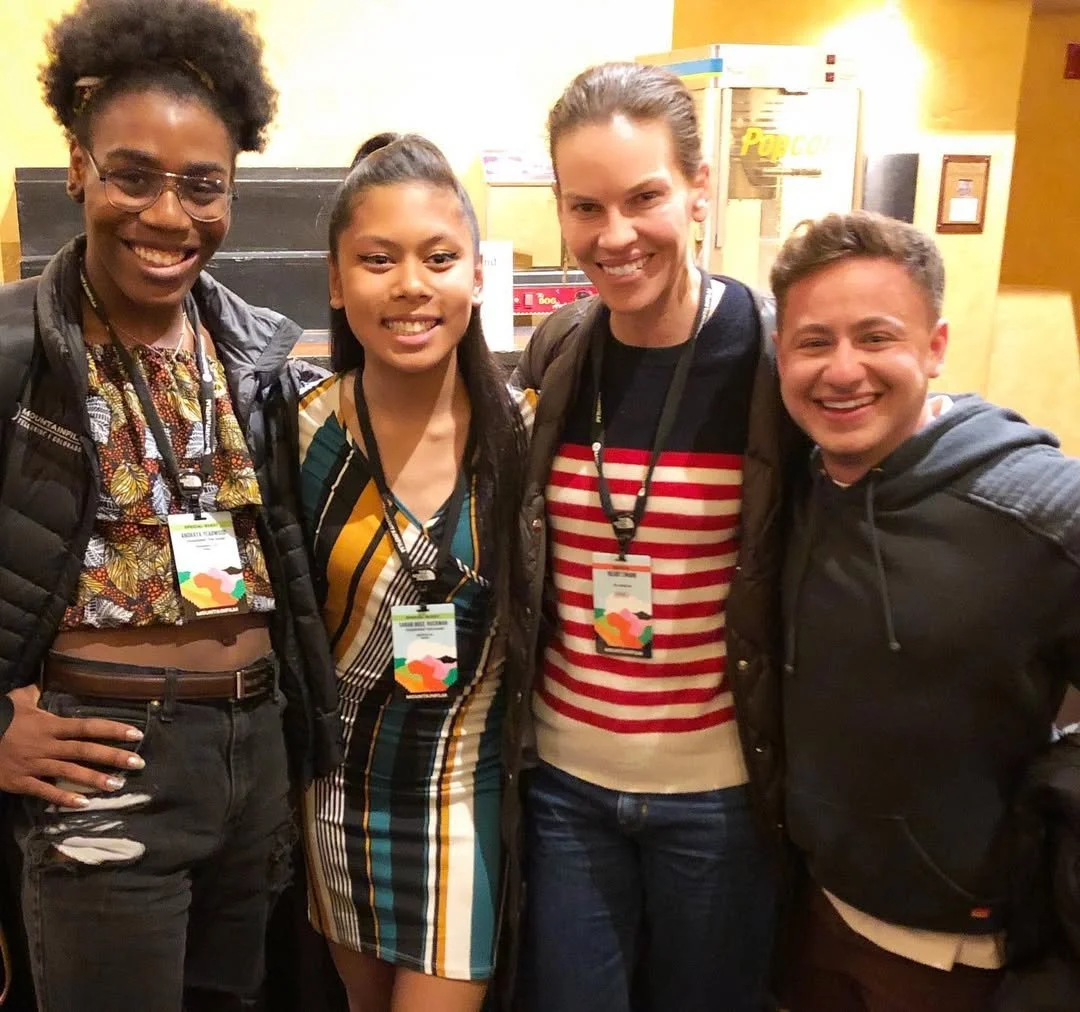
Image from Hilary Swank via Instagram (@hilaryswank).
Is there anything you’ve learned about yourself by helping these stories get out into the world? What lessons have you learned from not just being a producer but advocate for LGBTQ+ stories?
Alex: When I was growing up, I was always underestimated. I'm quite short in stature, and yet when I was playing sports, especially softball, I would surprise people with how powerful I could hit and how fast I was. And I think what I've learned about myself in producing and in life is that whatever the expectations are about what I can or can't do, it's up to me to show everyone else and myself what I actually can. And I have been incredibly lucky to work on films and projects independently, and at glad that, um, I and we as teams have carried over the finish line despite every challenge and obstacle. So that kind of persistence and resilience is something I've learned about myself, but it's always been a part of me. It's just finally come into my awareness in a new way.
You are the senior director of entertainment at GLAAD, would you mind touching on what your role entails specifically and how you are playing a part in aiding the acceptance of LGBTQ people through media?
Alex: I work with entertainment companies, studios and executives on helping them tell the most authentic, accurate and compelling LGBTQ stories. And in the best cases, that means reviewing scripts, um, providing feedback, being in conversation about a character or a narrative arc, helping with casting, uh, doing media trainings and marketing, press strategizing to make sure that a character is going to feel representative of the person or community that that person is representing. And also identifying landmines. So what we always say at GLAAD is; we'd rather create or step on those intentionally rather than accidentally. And oftentimes because there has been so much stereotyping and tropes throughout the many years that LGBTQ people have been represented, There's not awareness even by LGBTQ people ourselves. And so part of it is giving all the information possible so that a film or television show or video game can arrive into the culture with the most awareness of how it will come to be and be received by the audiences that it will find us. So that is largely what my role is.
I feel like the documentaries you’ve worked on invite people into new experiences they would not otherwise understand, and on the other hand, they showcase that there is a place and future for everyone. What do you hope audiences will take away from Nikki Hiltz’s story?
Alex: There's always a person behind the headlines. And so whenever you're hearing about someone or something, there's someone being affected or impacted. And I'm hopeful that people see through Nikki's story that they are just a person and an athlete, and they happen to be non-binary and trans, but that their world is so much more than that.
While the world patiently awaits ‘Kick,’ you can see Alex’s acclaimed past works including; ‘Chasing Chasing Amy,’ ‘Disclosure,’ and ‘Changing the Game.’
TRENDING NEWS