‘Obsession’ Review: Curry Barker Masterfully Turns Male Fantasy into a Tragic Modern Possession Story
Written by Nik Mohan

Courtesy of Blumhouse.
Curry Barker’s ‘Obsession’ takes that familiar warning of “be careful what you wish for” and makes it feel viciously contemporary, plugging it into modern dating anxiety, romantic entitlement, male fantasy, and the nightmare of desire becoming total annihilation. The result is a film that feels both wickedly entertaining and intellectually sharp: a blood-slick relationship horror with a serious moral pulse.
The premise is elegantly cruel. Bear, played with vulnerability by Michael Johnston, is a socially awkward music-store employee hopelessly in love with his co-worker Nikki, played by Inde Navarrette. He can’t confess his feelings without practically collapsing under the weight of them, and his friends Ian and Sarah watch his romantic paralysis with a mixture of sympathy and alarm. When Bear buys a cheap novelty-store object called a “One Wish Willow,” he impulsively uses it to wish that Nikki would love him more than anyone else in the world. The object works… and that’s the problem.
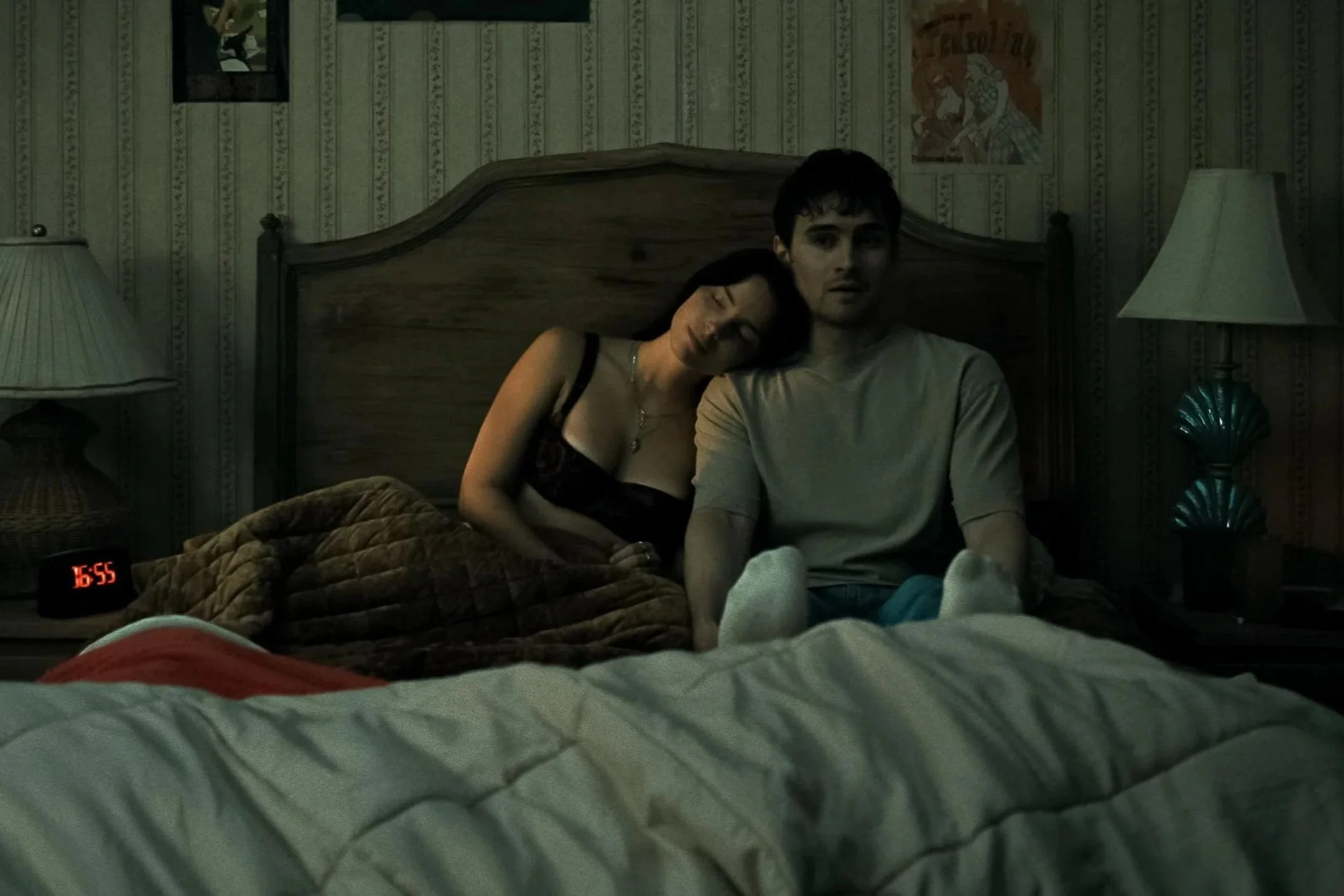
At first, ‘Obsession’ seems to be playing Bear’s fantasy straight: Nikki becomes affectionate, sexually assertive, and entirely devoted. But Barker is too sharp a filmmaker to leave the wish at the level of adolescent gratification. Nikki’s devotion quickly mutates into surveillance, possessiveness, violence, and a total collapse of selfhood. The film’s cleverest move is that its title keeps changing direction. Initially, the obsession appears to be Bear’s: his crush is so intense that even his best friend seems unsettled by it. Then Nikki becomes the monstrous obsessive. But the horror never lets Bear off the hook, because Nikki’s condition is not truly her desire, it’s his.
That moral complication gives ‘Obsession’ its bite. This is not a story about a clingy girlfriend from hell, though Barker fully weaponises that trope. It’s a story about consent, projection, and the violence hidden inside the fantasy of being loved without negotiation. Nikki becomes the dream partner for a certain kind of male wish fulfilment: beautiful, needy, erotic, loyal, and entirely organised around the man who wants her.
Courtesy of Blumhouse.
Barker has cited ‘Hereditary’ as a major influence on his work, and that lineage is most visible in the way ‘Obsession’ treats horror as emotional infection. Like Ari Aster’s film, Barker’s work is not content to scare us with isolated shocks; it allows dread to metastasise through domestic spaces, interpersonal tensions, and the awful feeling that something intimate has become spiritually diseased. Where ‘Hereditary’ locates its terror in family trauma and inherited doom, ‘Obsession’ finds its curse in desire itself. Love, or what Bear mistakes for love, becomes the force that corrodes everyone around it.
The tonal balance is impressively nimble. ‘Obsession’ has many moments worth a chuckle, but rarely in a way that defuses its menace or tension. The comedy comes from social awkwardness, from the absurdity of a cheap magical object causing catastrophic emotional damage, and from Barker’s gift for pushing relationship clichés until they snap.
Barker’s horror craft is equally strong. He has a sharp instinct for the sudden rupture: a burst of violence can arrive so abruptly that the film seems to lurch out of its own skin. Yet he is just as effective when he slows down, letting Nikki’s presence infect the frame through odd movements, bedroom shadows, shrieks, stares, and small violations of personal space. That is where the ‘Hereditary’ influence feels especially productive.
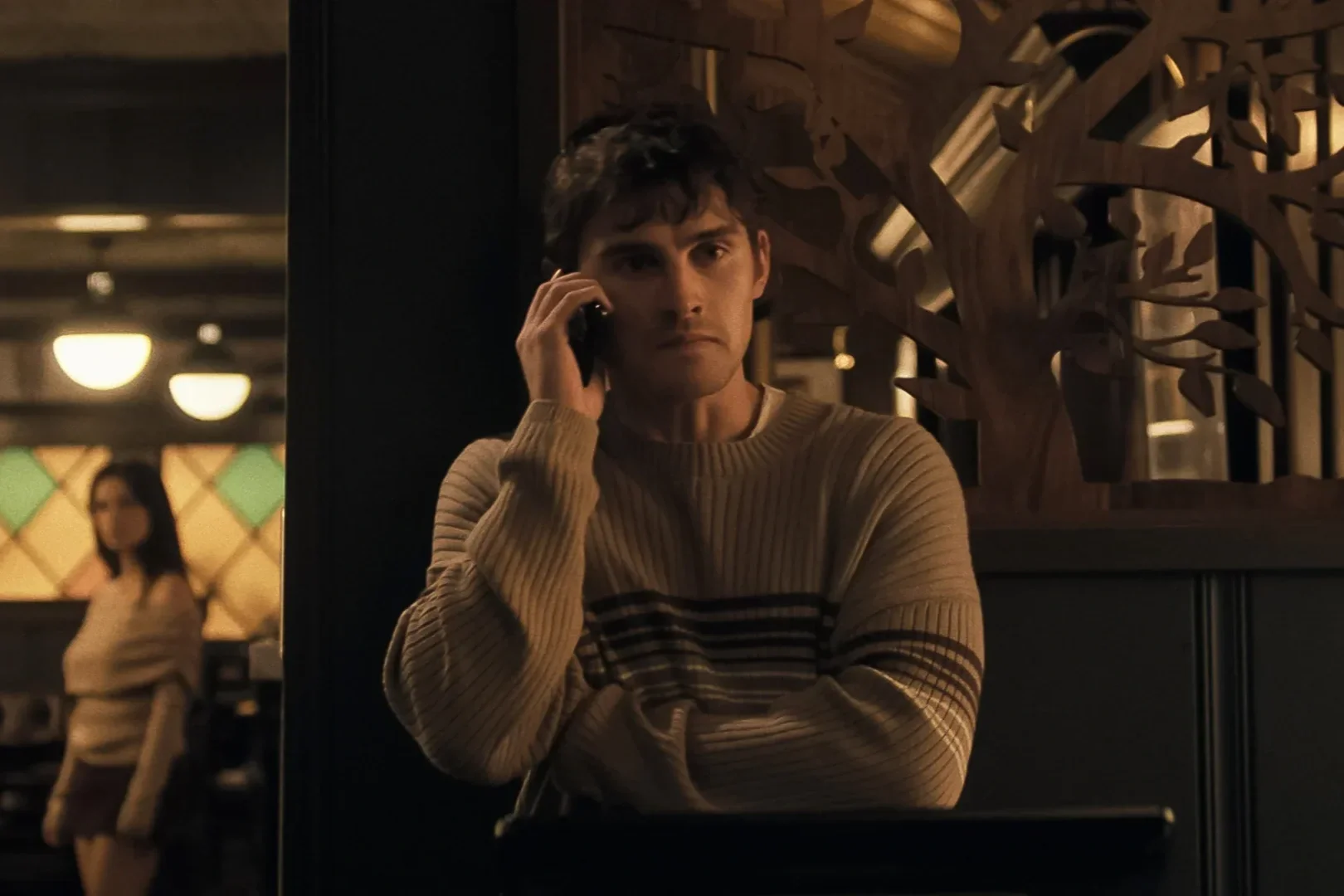
Johnston deserves credit for making Bear pitiable without sanding away his ugliness. He does not play him as a simple nice guy wronged by supernatural forces; he plays him as someone weak, lonely, and capable of enjoying an unethical miracle until it starts inconveniencing him. That willingness to look pathetic gives the film an uncomfortable honesty.
Courtesy of Blumhouse.
Still, the film belongs to Inde Navarrette. Her performance is tremendous: funny, frightening, strange, and tragic. As the enchanted (or rather, possessed) Nikki, she gives romantic intensity the quality of a seizure. Her body seems hijacked by devotion. Her voice, movement, and glare become weapons. Yet in the brief moments when the real Nikki flickers through, Navarrette reveals the horror beneath the horror: a woman trapped inside someone else’s fantasy, confused by what her own body has been made to do. It is a star-making performance because it refuses to lock-in Nikki as only a monster. She is also the film’s central victim.
‘Obsession’ is not flawless. It occasionally stretches its suspense further than necessary, and a few explanations of the One Wish Willow’s mechanics are less elegant than the film around them. Bear’s psychological evolution could also be tightened in places. But these are minor reservations in a film this alive with invention.
What makes Obsession so exciting is that it treats horror not as a delivery system for shocks alone, but as a diagnostic tool. Barker uses the supernatural to expose something painfully recognisable: the desire to be loved absolutely, and the terror of discovering what “absolutely” really means. The film is gory, goofy, nasty, intelligent, and unexpectedly sad.
Curry Barker has made a breakout film that feels formally assured, emotionally nasty, and violently of the moment. ‘Obsession’ grants its central fantasy, then makes us watch that fantasy rot. It’s horror at its most entertaining, and its most revealing.
Our score: ★★★★★