Olly Ginelli on ‘The Long Spring’, and Turning a Real Refugee Story Into Film
Interview by Nik Mohan | Written by Kevin Ward
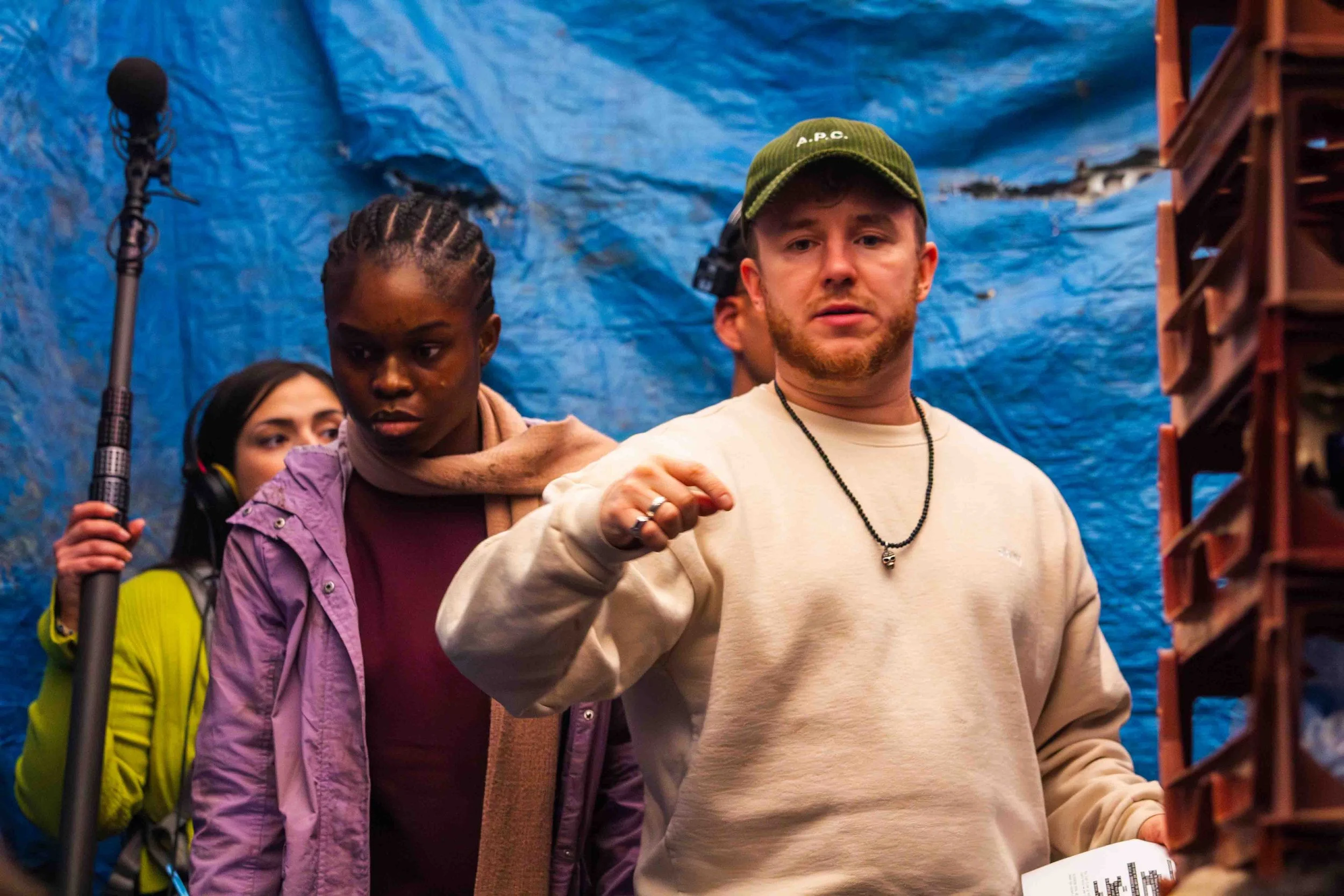
Courtesy of Olly Ginelli.
What began as a chance encounter in a refugee camp has become one of the most personal projects of filmmaker Olly Ginelli’s career. Inspired by the true story of Saady, a Kurdish refugee Ginelli met while volunteering in 2016, ‘The Long Spring’ transforms a harrowing journey to the UK into an intimate, deeply human short film.
Now BAFTA and BIFA qualifying, with festival wins, international screenings and plans for a television adaptation, the project has travelled far beyond its beginnings. Top Film sat down with Ginelli to discuss the responsibility of telling Saady’s story, the gamble that brought the film to life, and how ‘The Long Spring’ could mark the beginning of something much bigger.
What made you want to tell this story, what motivated you?
Olly: My time in refugee camps. That was way before I was a filmmaker — I wasn’t going there for any sort of documentary. When I was there, I saw human trafficking gangs operating within the camps, they were intimidating us as volunteers — made their presence known. That was a complete shock to me; that people would be willing to take advantage of the most vulnerable people on the planet. One of the refugees who was helping us there made it to the UK later on in the back of a lorry. He was helping us because he speaks five languages, and we were on resource duty; giving out blankets, heaters [among other things]. He was translating between all the different cultures. When he made it to the UK, I thought I’d never see him again. He found me on Facebook and we met up, and he told me the stories of what it was like in the back of those lorries and he successfully claimed asylum because he was fleeing ISIS. That inspired the film.
Did you always have such a clear vision of how you wanted the film to be?
Olly: There were bigger narrative arcs that I wanted to point to, because this was written as a feature film, which got selected in the top 1% of the BBC Writersroom . I wrote the feature film first, then made the short once it got selected there [at BBC]. One of the characters in the film, Nasser, you briefly see a text that he’s got saying that you’re a coward, wives and daughters have picked up arms. I wanted to give that character a background because he does something brave later in the film. I wanted to give him an arc because he’s fled war and he didn’t stay to fight, but he finds his bravery.
Talk to me about your amazing leads for the film; Warren Mendy and Assiba Blejah, how did you discover them and bring them on board?
We had two casting directors on this — the nature of short films, people have to step in and out of roles when they have bigger paying roles. Assiba just got Best Supporting Actress at the Worcester Film Festival; we’re very happy about that! And Warren just blew me out of the water with his self-tape. The first 10 or 15 self-tapes weren’t quite right, have I written a bad script? Then along comes Warren and just absolutely drills it home. It was like the person I’d been seeing in my head all those months while writing it had appeared. He is gonna be big. Watch this space for Warren Mendy.
Talk to me about the visual language you wanted to create within this confined space, and what were those discussions like with your cinematographer?
All credit goes to Michael Kinsella-Perks — the best D.P. I’ve ever worked with. He’s one of those people that comes into the role of a D.P., but he’s really just an advocate. Because if he believes in the idea — which he did — then he’s gonna have conversations with you about every single part of the film… The 4:3 ratio was something we were convinced and confident with because we wanted it to feel like a constrained space. We almost went with a 1:1 ratio but we thought it might be too much. We knew we had to film this in the back of a lorry. We couldn’t afford a set build so hiring a real lorry was actually cheaper. And we quickly worked out that you can’t put actors and expensive camera equipment in a real driving lorry. We shot it all in the back of a studio, and Michael rigged up lights and worked with a really good lighting operator to work out different speeds that lampposts would flash along. He was so creative as well. Like what if the truck goes through a tunnel then everything goes dark for a second. He shows up with a thousand ideas!
When you were writing these two central characters, was it always about the story between them or at one point, did you ever have more characters involved as additional conflict?
Olly: It was always about a brother and sister dynamic. It’s one of those tricky things where even though I was consulting the refugee who I’d met through every stage of the process, it wasn’t a completely biographical story. I just wanted to get across a wider picture when it comes to the human trafficking story. We went with an ensemble cast, you’ll notice there’s people from every continent; from East Asia, West Africa, Middle East. The reason I made that choice is to show that human trafficking takes place globally. It’s documented in every country on the planet, including Iceland, which a lot of people don’t know. In terms of the main character, I tried to write a story that would be relatable for a lot of young men. When you’re young you think you know the world. For a lot of young men the journey into manhood is to act like you have everything under control, but slowly reality and life will give you a slap around the head. I wanted to try and make that the arc [for the lead], and reality brushes up against him.
Is there anything you’ve learned about yourself from tackling this project?
Olly: I could write a book! The best bit of advice that I heard throughout this production was; if you want to be a good director you have to cast well. And, this is only my second narrative short, so there were a lot of nerves going in. We had to raise £50,000 in private finance, so that created a lot of pressure. You suddenly have a crew of 45 people and you better deliver. So I spent a lot of time in casting — thank God — and you get to set and the notes are little tweaks and ideas instead of trying to build a performance.
For Ginelli, ‘The Long Spring’ is more than a calling card or festival success story; it is the result of nearly a decade spent carrying one encounter forward and trying to do justice to the person at its centre. From the risks taken to get the film made to its growing life beyond the short itself, the project has become a reminder of how deeply personal filmmaking can be when it begins with trust rather than ambition.
MORE NEWS