‘Bleeder’ Review: Pain Becomes a Profession in Jeremy Max’s Bruising Study of Grief
Review by Nik Mohan
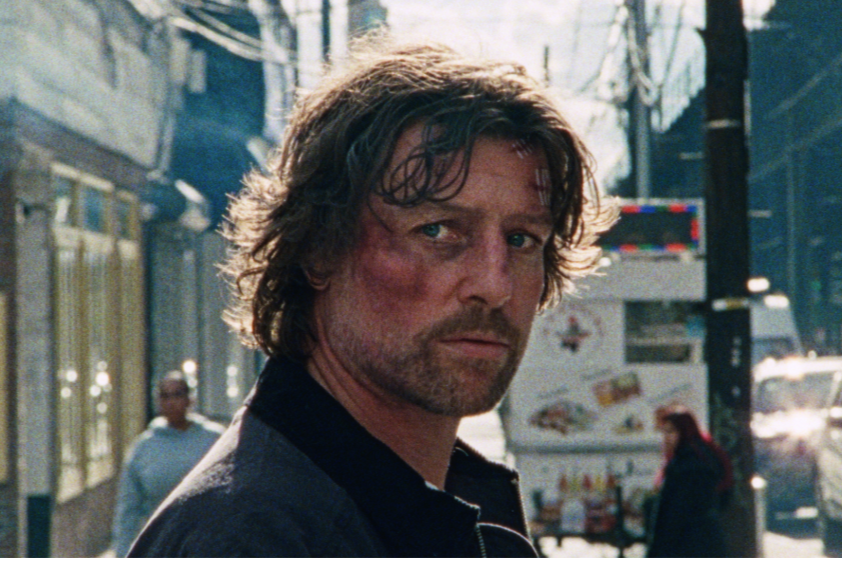
Courtesy of ‘BLEEDER.’
There is something immediately unsettling about the central idea behind ‘Bleeder’: a grieving man who makes his living by allowing other people to beat him. It’s a premise that could become a gimmick, an excuse for brutality or an overly obvious metaphor for self-punishment. Instead, writer-director Jeremy Max uses it as the foundation for an intimate study of grief, masculinity and the ways people can convince themselves that suffering is easier than healing.
Making its World Premiere at the HollyShorts Film Festival, ‘Bleeder’ centres on a man who has found a disturbing way to turn his own self-destruction into routine. Physical pain is predictable. It can be measured, endured and eventually walked away from. Grief is far less manageable. Max's film understands that distinction, gradually revealing that the violence its protagonist accepts is only a physical manifestation of something much deeper.
Former professional boxer John Duddy’s history in the ring gives the physical side of the film an authenticity that would be difficult to manufacture, but it is his restraint away from the violence that makes the performance work. There is a heaviness to him that tells us almost everything we need to know before the character is willing to admit any of it himself.
This makes ‘Bleeder’ less a film about fighting and more about avoidance. Its protagonist may be consistently bruised and battered, but the real conflict is his refusal to confront the grief underneath it all. Max cleverly explores the warped logic of someone who would rather suffer deliberately than risk becoming vulnerable. I suppose this tells us that when pain becomes familiar enough, it can begin to resemble control.
Natalie Roy provides an important counterweight to that darkness. Her performance brings levity into the film, helping shift ‘Bleeder’ away from pure self-destruction and towards the possibility of recovery. The fractured relationship at the core of the story reinforces one of the film's most effective ideas: sometimes being cared for can feel more frightening than being hurt.
Cinematographer David Foy complements that emotional intimacy without trying to beautify the ugliness of the material. The imagery feels appropriately close and human, allowing bruises, exhaustion and vulnerability to speak for themselves. Rather than turning the violence into spectacle, the filmmaking keeps our attention firmly on what each act of punishment means to the person experiencing it.
There is an unavoidable bluntness to the metaphor. A man unable to process his emotional pain literally gets beaten for money, and audiences will understand the symbolism almost immediately. At times, ‘Bleeder’ could perhaps trust its premise to carry slightly more of that meaning without underlining it. But there is also something refreshing about how direct Max is willing to be. This is not a film interested in disguising its emotional intentions behind layers of ambiguity.
‘Bleeder’ eventually finds a hopeful core beneath its grim exterior, but the film does not suggest that grief disappears through one revelation or one meaningful interaction.
As a proof of concept for a planned feature, there is certainly more territory here worth exploring. The premise naturally raises questions about how this strange profession operates, what initially drove this man towards it and how long someone can continue confusing punishment with survival. A longer version could deepen those psychological layers considerably.
But as a short, ‘Bleeder’ lands its punches where they matter. John Duddy gives the film an intensely physical presence while Jeremy Max finds something tender underneath the bruises.
Our score (out of 5 stars): ★★★★☆