‘Spider-Man: Brand New Day’ Review: Tom Holland Finds Heart in Heroics
Review by Kevin Ward
Courtesy of Universal.
After the multiversal overload of ‘Spider-Man: No Way Home,’ there was really only one sensible direction for Tom Holland’s Peter Parker to take: backwards.
Not backwards in terms of quality, necessarily, but towards something smaller, lonelier and more recognisably human. ‘No Way Home’ ended with Peter making the ultimate sacrifice, allowing the entire world (including MJ and Ned) to forget he ever existed. ‘Spider-Man: Brand New Day’ picks up years later with Peter living alone in a cramped New York apartment, fighting crime with remarkable efficiency and quietly watching the people he loves continue their lives without him.
Directed by Destin Daniel Cretton, the film wisely leaves the multiverse behind and returns Spider-Man to the emotional territory that has always suited him best: responsibility, grief and the painful consequences of trying to do the right thing. It’s still a busy Marvel blockbuster filled with crossovers, collapsing buildings and digital destruction, but its most effective moments are always the quietest.
Tom Holland appears noticeably older and physically stronger in his fourth solo outing, but the more important development is emotional. This is no longer the excitable teenager desperate to impress Tony Stark. Peter is exhausted, isolated and increasingly unsure whether being Spider-Man has left any space for Peter Parker to exist.
He repeatedly rehearses a speech intended for MJ, attempting to explain that they once loved each other and that the world had to forget him to prevent a catastrophe. Yet approaching her is far more difficult than fighting another supervillain. MJ, played once again by Zendaya, has built a life without him, while Ned has also moved forward after graduating from MIT and returning to New York.
Peter initially settles for observing them from a distance, an understandable but increasingly uncomfortable habit that occasionally borders on stalking. Watching MJ with a new boyfriend becomes another form of self-punishment, reinforcing Peter’s belief that loneliness is simply the cost of his responsibility.
Holland gives one of his most emotionally restrained performances in the role. He remains funny and energetic beneath the mask, but there is a heaviness to Peter that was largely absent from the earlier films. His grief over Aunt May remains unresolved, while the knowledge that MJ and Ned are happier without remembering him creates a particularly cruel dilemma: telling them the truth might restore his life, but it could also destroy theirs.
The film’s central threat mirrors that internal conflict. A mysterious force begins possessing people across New York, moving between hosts and turning familiar faces into potential enemies. The phenomenon first emerges during the transfer of Mac Gargan, better known as Scorpion, to a maximum-security facility operated by the Department of Damage Control.
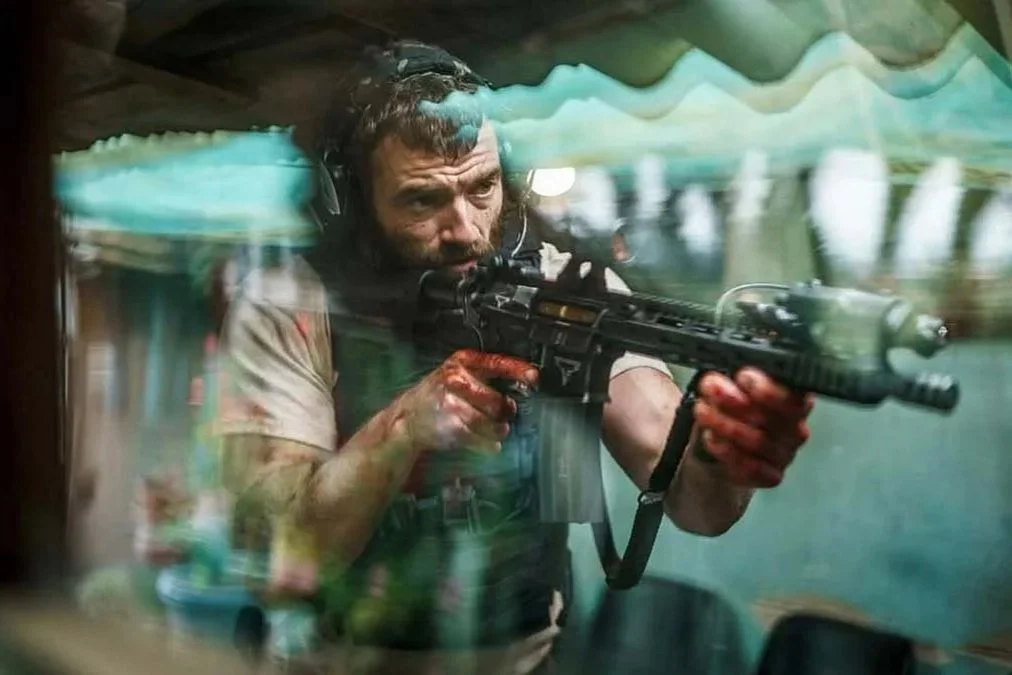
Michael Mando finally receives a proper return after being teased all the way back in ‘Spider-Man: Homecoming,’ although the film deliberately keeps viewers guessing about whether Scorpion is the true threat or simply another victim being manipulated.
The possession storyline is accompanied by strange changes inside Peter himself. He begins experiencing severe headaches, temporary paralysis and a gradual loss of control over his abilities. His spider DNA appears to be overpowering his human side, pushing the film briefly towards something resembling body horror. There are flashes of a more unsettling Spider-Man movie here (almost a superhero version of David Cronenberg) though the film never fully commits to that darker possibility.
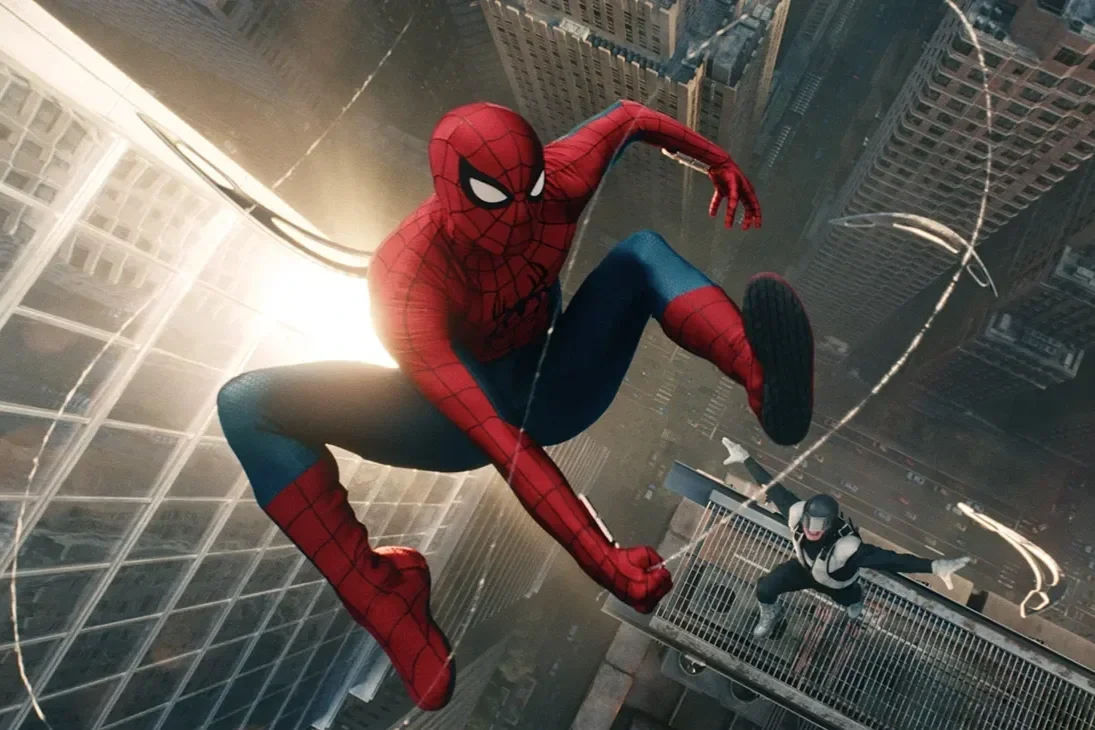
Peter’s web-shooting also becomes unreliable, creating an interesting physical expression of his deteriorating mental state. He can still swing through Manhattan with the usual impossible elegance, but his body is no longer entirely under his control.
Cretton stages several excellent action sequences around that instability. An early chase involving a hijacked tank tearing through New York is energetic, destructive and impressively physical. The film also introduces Bill Metzger, the coolly authoritative director of Damage Control, played by Severance star Tramell Tillman. Metzger claims his organisation is studying captured villains and repurposing their technology to protect the public, which naturally sounds like the sort of plan that will eventually go horribly wrong.
One of those supposed success stories involves the Hand, an army of red-clad ninjas whose violent skills have apparently been redirected towards law enforcement. Their arrival gives Cretton an opportunity to revisit the elaborate martial-arts choreography of ‘Shang-Chi and the Legend of the Ten Rings,’ resulting in some of the film’s most inventive combat.
As expected, Peter does not face the crisis alone. Mark Ruffalo returns as Bruce Banner, now teaching physics to students who are considerably more interested in the Hulk than their coursework. His involvement inevitably leads to a large-scale confrontation, although Ruffalo continues to find humour and sadness in Bruce’s uneasy relationship with his destructive alter ego.
Jon Bernthal is even better as Frank Castle, the Punisher, who forms a hostile but surprisingly affectionate partnership with Spider-Man. The film treats them as established frenemies, which may confuse viewers unfamiliar with their comic-book history, but Holland and Bernthal quickly make the dynamic work. Frank sees Peter’s morality as naïve, while Peter regards Frank’s methods as horrifying. Beneath the arguments, however, there is an obvious respect between two damaged men who have responded to grief in radically different ways.
There is a lot happening, and ‘Brand New Day’ occasionally struggles to control it all. The middle section becomes tangled in Damage Control conspiracies, superhero cameos and explanations about mutant abilities. Like many Marvel films, it eventually gravitates towards enormous destruction that appears catastrophic in the moment but will probably be cleaned up before the next instalment.
This remains one of the MCU’s most persistent limitations. New York is smashed apart with such regularity that the spectacle can feel strangely weightless. The live-action Spider-Man films also lack the formal imagination of the animated Spider-Verse movies, which continue to find more inventive ways of representing movement, identity and comic-book imagery.
Zendaya is particularly strong. MJ’s lack of powers becomes an advantage, grounding scenes that might otherwise collapse beneath exposition and visual effects. Zendaya brings a calm, adult presence to the film, and her chemistry with Holland remains convincing even when MJ no longer understands why Peter seems so familiar. Their scenes together are painful precisely because the audience remembers what she cannot.
Jacob Batalon remains equally valuable as Ned, whose humour softens the bleakness without undermining it. The bond between Peter, MJ and Ned has been developed across four films, and ‘Brand New Day’ understands that audiences are invested in them as people rather than simply supporting characters surrounding Spider-Man.
Sadie Sink also makes a strong impression in a role the film initially presents as furious, manipulative and dangerous. The eventual revelation of her character’s identity places a familiar figure in a new context, giving her a tragic history that closely reflects Peter’s own experiences of loss. Sink brings enough intensity and vulnerability to suggest that the character will remain important beyond this film.
Michael Giacchino’s score helps Cretton balance these competing tones. The music moves between melancholy passages reflecting Peter’s isolation and the larger heroic themes expected from a Spider-Man adventure. It gives the emotional scenes room to breathe while still delivering the necessary momentum during the set-pieces.
The result is an entertaining, occasionally moving film that wants to mature alongside its leading actor but remains trapped inside a franchise that is still nervous about changing too much. Holland has grown, Peter has suffered, and the relationships have become more complicated, yet the surrounding machinery remains reassuringly familiar.
That is both the film’s strength and its weakness.
‘Spider-Man: Brand New Day’ does not reinvent the superhero movie, nor does it possess the novelty of the Spider-Verse animations. A genuinely radical reboot may eventually be required. For now, however, this smaller and more introspective chapter is a welcome correction after the excess of the multiverse era.
It remembers that Spider-Man is most compelling not when he is saving reality alongside an army of recognisable characters, but when he is standing outside a café, wondering whether he has the courage to speak to someone who used to love him.
The title promises a fresh beginning. The film does not completely deliver one, but it moves Peter Parker a meaningful step forward… even as the Marvel machine continues swinging along the same familiar path.
Our score (out of 5 stars): ★★★★☆