‘Capturing Kennedy’ Intimately Explores The Invisible Architect of the Kennedy Image
Written by Nik Mohan & Alexandra Paszek
Courtesy of ‘Capturing Kennedy.’
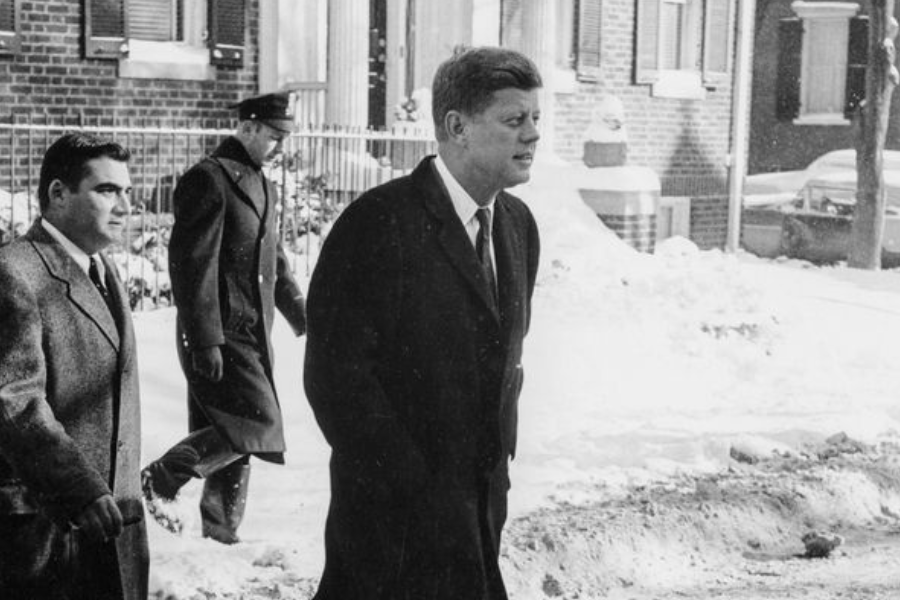
‘Capturing Kennedy’ offers a quietly revelatory reconsideration of the Kennedy years by shifting the lens away from power itself and toward the act of witnessing. Rather than rehearsing familiar political narratives, the documentary foregrounds the life and work of Jacques Lowe, the man whose photographs helped define the visual mythology of Camelot while he himself remained almost entirely invisible.
At first glance, the film appears to be another entry in the vast archive of Kennedy-era retrospectives. Instead, it unfolds as a layered biography—part historical inquiry, part meditation on memory and loss. Lowe’s story is extraordinary even before it intersects with American political history. A Holocaust survivor who spent years hiding during World War II, he arrived in the United States as a young immigrant and, by his late twenties, found himself embedded within the inner circle of a future president. His ascent was not driven by ambition or proximity to power, but by an instinctive understanding of restraint and timing. These qualities helped define his photographic voice.
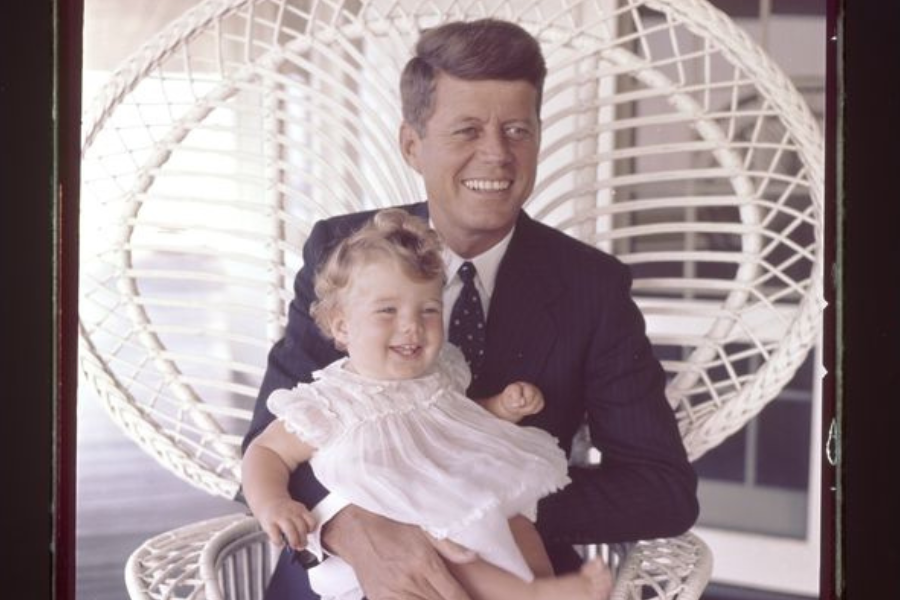
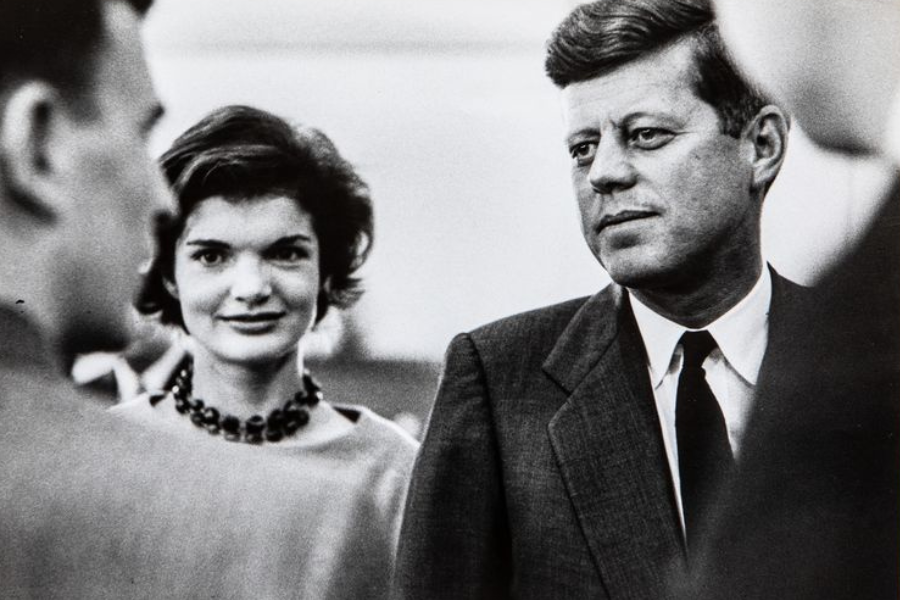
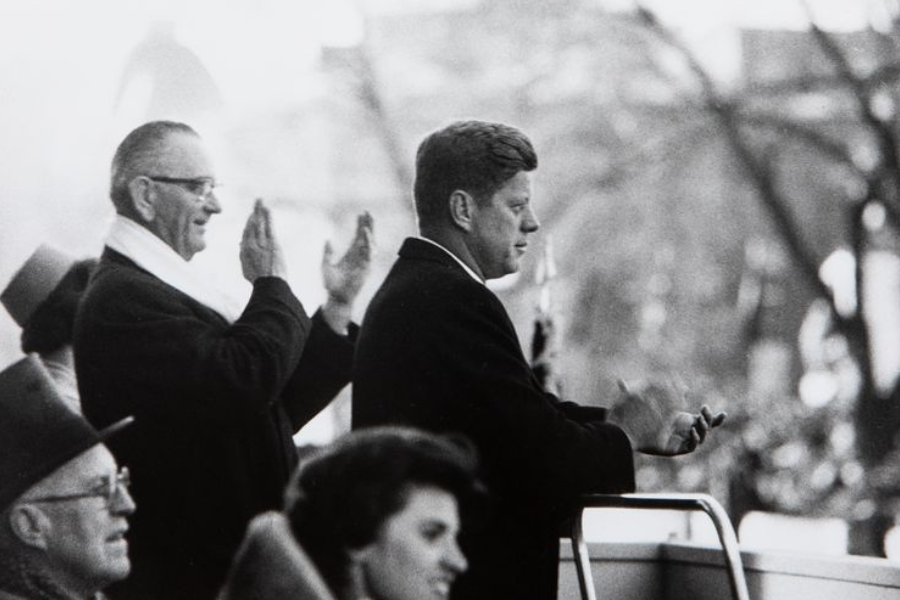
The documentary draws extensively from newly uncovered archival material, including interviews recorded late in Lowe’s life. These moments give the film its emotional and intellectual center. Lowe speaks not as a mythmaker, but as a craftsman: someone deeply conscious of the ethics of observation. He photographed without spectacle, never interrupting, never inserting himself into the scene. In doing so, he produced images that feel like authentic, private moments, accidentally preserved for history.
Courtesy of ‘Capturing Kennedy.’
Director Steele Burrow structures the film with an elegant sense of rhythm, moving fluidly between historical footage, personal testimony, and contemporary reflection. The result is a narrative that resists linearity in favor of accumulation. Each return to Lowe (whether as a young photographer navigating the pressures of a presidential campaign or as an older man reflecting on survival and loss) adds gravity and complexity.
Interviews with historian Fredrik Logevall provide crucial political context, while contributions from Lowe’s daughter, Victoria Allen, lend the film a measured intimacy that never slips into sentimentality.
The film is especially effective in tracing the afterlives of images. Lowe’s photographs became cultural artifacts, reproduced endlessly and often detached from their maker.
Courtesy of ‘Capturing Kennedy.’
Around 40,000 of Jacques Lowe's JFK negatives were lost in the World Trade Center attacks on September 11, 2001 (which were stored in a Manhattan bank vault within the basement of the towers).
Visually, ‘Capturing Kennedy’ is restrained and confident. The cinematography avoids excess, allowing still photographs and archival footage to breathe.
The documentary succeeds not because it reveals new political secrets, but because it reframes how history itself is constructed. It asks viewers to consider who gets remembered, who does the remembering, and what is lost when the record disappears.
Courtesy of ‘Capturing Kennedy.’
‘Capturing Kennedy’ score: ★★★★☆
‘Capturing Kennedy’ is available to stream on Prime Video and Apple TV+.