Lee Cronin’s ‘The Mummy’ is a Dread-Inducing Horror That Doesn’t Quite Hold Together
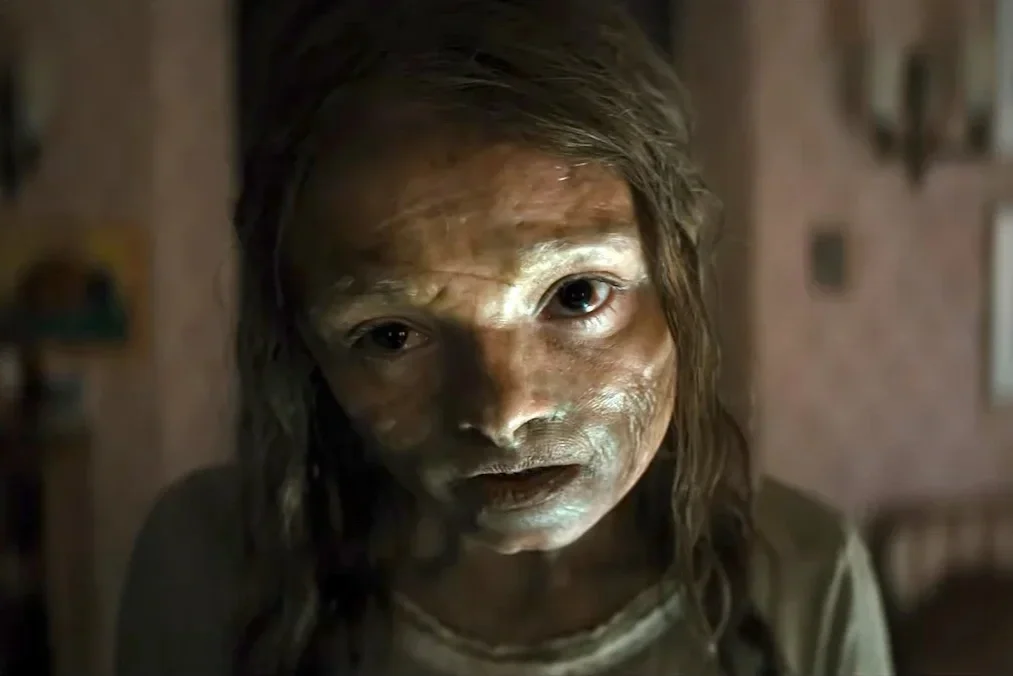
Courtesy of Warner Bros. Pictures.
Lee Cronin has built a reputation for digging into the ugliest corners of family life, and his take on ‘The Mummy’ leans hard into that strength. This isn’t a globe-trotting adventure or a gothic throwback — it’s a grim, goopy possession story that trades ancient curses for domestic trauma. Think ‘The Exorcist’ filtered through ‘Hereditary,’ with a distinctly Cronin-esque obsession with bodily fluids and parental dread.
The setup is strong: a young girl abducted in Cairo mysteriously returns years later, only for her family to realize that whatever came back isn’t really their daughter. From there, the film relocates to a sun-bleached New Mexico home that becomes less a sanctuary and more a pressure cooker. Cronin is clearly more interested in emotional rot than myth-building, using the mummy as a vehicle to explore grief, denial, and the dangerous idea that love alone can fix the unfixable.
When it works, it really works. Cronin brings a visceral intensity to the horror, backed by an aggressive sound design and a camera that rarely sits still. There’s a nasty streak here that horror fans will appreciate (black vomit, bone-crunching contortions, and a steady escalation of body horror that borders on gleeful excess). A few sequences, especially in the back half, hit that sweet spot of grotesque and darkly funny, hinting at the wild energy he tapped into with ‘Evil Dead Rise.’
But the film struggles to hold itself together. For all its ambition, it feels stitched together from better movies, borrowing heavily from possession classics without adding enough of its own identity beyond the surface-level grime. The characters are thinly drawn, which makes the emotional core (a family trying to reclaim their lost child) feel more like an idea than something fully realized. And while the film gestures toward deeper themes about trauma and family bonds, it rarely digs into them with much clarity or control.
Even the titular threat feels a bit undercooked. Turning the mummy into a possessed teenager is a bold swing, but it also robs the monster of some of its mystique, reducing it to familiar genre beats. The tension often hinges on the family’s refusal to see what’s right in front of them, which can feel more frustrating than tragic.
Still, Cronin’s commitment to going big — and often gross — carries the film a long way. The final act, while messy, leans into full-blown chaos with enough conviction to leave an impression, even if it doesn’t entirely earn its emotional or narrative payoff.
In the end, ‘The Mummy’ is an uneven but watchable horror remix: derivative, overlong, and occasionally hollow, yet elevated by flashes of style, nerve, and unapologetic nastiness. It may not redefine the monster, but it delivers enough shocks and sick thrills to satisfy — just don’t expect it to stick with you much longer than the mess it leaves behind.
Our score: ★★★☆☆