‘Peaky Blinders: The Immortal Man’ is a Satisfying Finale to the Thomas Shelby Story, Enhancing the Show’s Legacy
Courtesy of Netflix.
‘Peaky Blinders: The Immortal Man’ brings Steven Knight’s smoky, razor-edged crime saga to the big screen.
Set against the shadow of World War II, the film reunites audiences with Tommy Shelby and the world of Birmingham’s most notorious gang, blending wartime intrigue with the series’ trademark mix of brutality, swagger, and immaculate tailoring. Directed by Tom Harper and led once again by Cillian Murphy’s magnetic performance, the film attempts the delicate task of satisfying longtime fans while expanding the story into a more cinematic, high-stakes spectacle.
With ‘The Immortal Man,’ writer-producer Steven Knight brings his long-running crime saga (first introduced in 2013) to the big screen. The film wastes little time positioning Shelby on the side of relative righteousness. Though he remains ruthless and calculating, his enemies this time are literal Nazis, which makes even Tommy Shelby look almost virtuous by comparison. Set in 1940, several years after the series finale, director Tom Harper places the Peaky Blinders within a wartime thriller involving a fascist plot to destabilize Britain using a massive shipment of counterfeit currency.
The film functions largely as fan service, packed with references and character beats for longtime followers of the series. Yet it remains accessible enough for newcomers, operating as a pulpy wartime adventure even without deep knowledge of the show. When it arrives on Netflix after its brief theatrical run, it will likely find a sizable streaming audience.
Visually, ‘The Immortal Man’ director ‘Tom Harper’ reminds us how cinematic ‘Peaky Blinders’ has always been. Shot on film by series cinematographer George Steel, the recreation of Blitz-era England feels tactile and grimy, filled with mud, rubble, and soot. The story begins with the bombing of a Birmingham weapons factory and the introduction of the film’s antagonist, Beckett (Tim Roth), a British fascist working with the Nazis to undermine Britain’s economy using forged banknotes.
To distribute the counterfeit currency, Beckett recruits Duke Shelby (Barry Keoghan), Tommy’s estranged son and the current leader of the Peaky Blinders. Duke is volatile and nihilistic, motivated less by ideology than by resentment and ambition. Keoghan’s unsettling screen presence makes him a natural fit for the role.
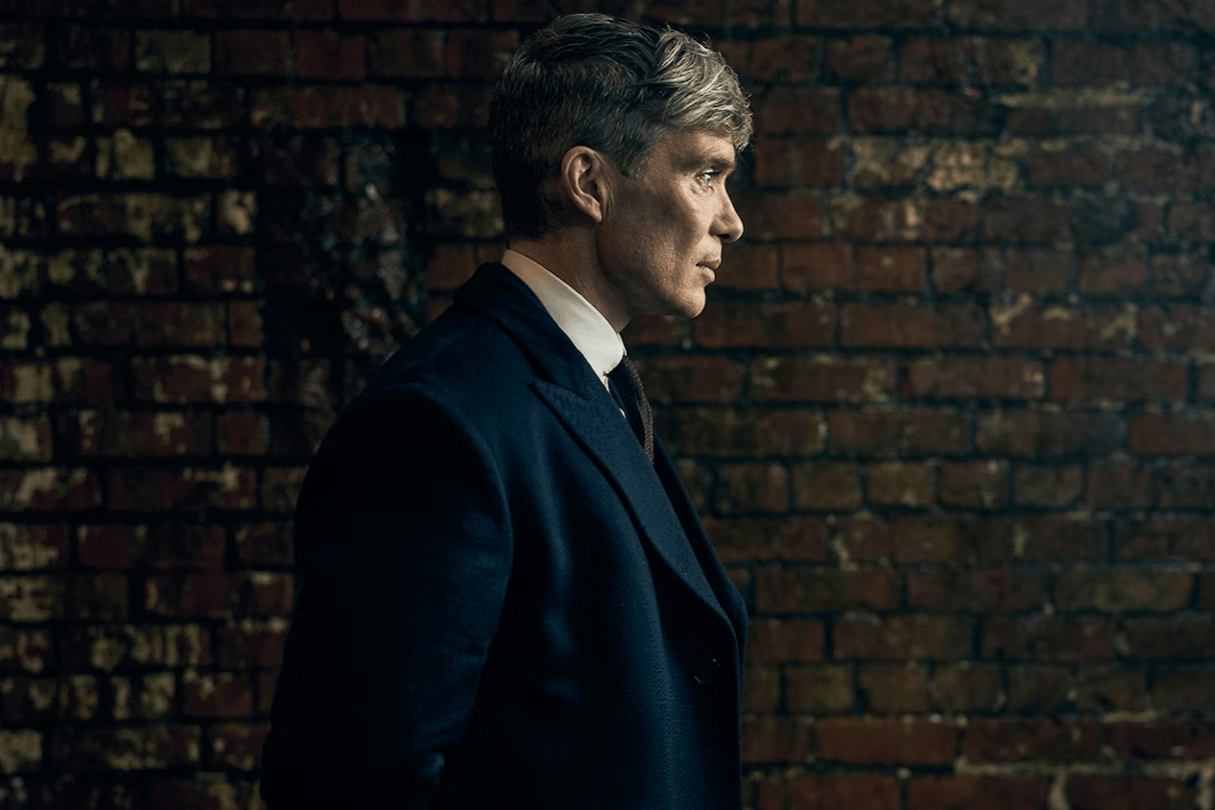
Tommy himself initially appears retired and grief-stricken, living in isolation while writing his memoirs. Murphy plays him with a subdued weariness that contrasts with the sharp-suited gangster audiences remember. But after persuasion from his sister Ada (Sophie Rundle) and the enigmatic Romany seer Zelda (Rebecca Ferguson), Tommy returns to Birmingham—and to the impeccable suits that have become synonymous with the character.
That sartorial spectacle remains one of the franchise’s great pleasures. Costume designer Alison McCosh outfits Murphy in elegant coats and tailored suits that transform even grim Birmingham streets into something resembling a runway. This subtle sense of theatricality keeps the film’s violence from growing monotonous.
Harper strikes a careful balance between seriousness and self-awareness, peppering the film with affectionate callbacks for longtime fans, including the inevitable return of Nick Cave’s “Red Right Hand.” The modern rock soundtrack, once a defining stylistic flourish, now feels slightly dated, but it remains part of the show’s identity.
‘The Immortal Man’ embraces the pulpy absurdity of its premise while moving efficiently toward an unexpectedly somber finale. Beneath the swagger and nostalgia lies a surprisingly reflective note. For a story built on razor blades, gunfire, and immaculate tailoring, the film ends with a touch of melancholy, which true fans of the series would appreciate.
‘Wuthering Heights’ score: ★★★★☆