‘House of the Dragon’ Season 3 Is a Critical Hit, So Why Are Fans So Divided?
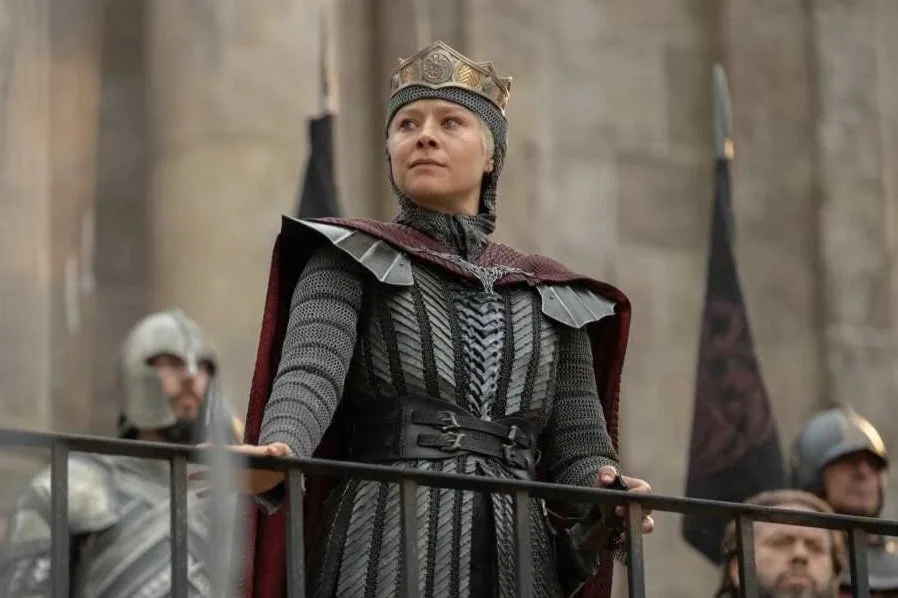
Courtesy of HBO.
HBO’s ‘House of the Dragon’ has wrapped its third season with bigger battles, darker character turns and some of the most ambitious sequences the series has attempted. Critics largely loved it. Audiences, however, appear far less convinced.
‘House of the Dragon’ Season 3 has ended on what should, on paper, look like a triumph for HBO. The season currently holds an impressive 91% critics score on Rotten Tomatoes from 165 reviews, with the site describing the latest chapter as a reinvigorated season strengthened by new characters and larger battles. Yet the audience Popcornmeter tells a noticeably different story, sitting at 64% from more than 1,000 ratings.
That gap is even more apparent on Metacritic. Season 3 has a generally favourable 75/100 from critics, compared with a 5.3/10 user score. Of the 112 user ratings recorded at the time of writing, 47% are positive while 38% are negative.
So why has one of television's biggest fantasy shows become quite so divisive?
For many viewers, Season 3 delivered exactly what they had been asking for following the controversial conclusion to Season 2: actual movement in the Dance of the Dragons.
The season began with significantly more momentum, pushed the war into increasingly destructive territory and finally allowed many of the characters and conflicts that had spent years being positioned on the board to collide.
New additions including Ormund Hightower and Daeron Targaryen also gave Team Green a different energy, while Tom Glynn-Carney continued to make Aegon II one of the show's most compelling and unpredictable characters.
The spectacle increased too. Dragons, armies and major battles became considerably more prominent as Westeros descended further into civil war. Critics responded enthusiastically, with Rotten Tomatoes' consensus praising the season for delivering more thrilling battles and a renewed sense of momentum.
Even positive audience reactions frequently point toward the same issue: the middle of the season slows down considerably.
One Rotten Tomatoes audience review sums up the frustration particularly well, praising the opening episodes and introduction of new characters before arguing that the season eventually begins to drag again through unnecessary material.
It's a criticism that has followed ‘House of the Dragon’ for some time. The series remains far more interested in political conversations, fractured relationships and internal conflict than simply moving from one battle to another.
For viewers invested in that methodical approach, the restraint can make the eventual violence considerably more meaningful. For others, it can feel like waiting several episodes for the story to begin moving again.
Season 3's finale, “The Treasons at Tumbleton,” appears to have brought some viewers back onside.
After several episodes of build-up, the series finally unleashed the Battle of Tumbleton — a massive, chaotic confrontation involving armies, dragons, betrayals and devastating civilian casualties.
Esquire argued that the finale effectively rediscovered what makes ‘House of the Dragon’ exciting, while simultaneously criticising the slower middle portion of the season. The outlet noted that the season's major battles helped provide genuine stakes after prolonged stretches of characters waiting for larger events to unfold.
That perhaps captures Season 3's biggest contradiction.
When ‘House of the Dragon’ is operating at full capacity, there is still very little else on television quite like it. The scale is enormous, the performances remain consistently strong and the political consequences behind the violence prevent the dragon battles from becoming empty spectacle.
But the show frequently appears reluctant to maintain that momentum. The result is a season containing some of its strongest material alongside stretches that have left viewers wondering why reaching those moments takes quite so long.
There is also another audience ‘House of the Dragon’ must contend with: people who already know how this story is supposed to unfold.
George R.R. Martin's Fire & Blood intentionally presents Targaryen history through contradictory accounts, giving the television adaptation enormous freedom to interpret events.
That freedom has increasingly resulted in significant changes.
The Battle of Tumbleton, for example, was expanded and reworked substantially for television, turning the location into an even larger dramatic centrepiece.
For viewers approaching the series purely as television, those decisions can simply be judged on whether they work dramatically.
For readers, every alteration becomes part of a larger debate over whether the adaptation is improving, simplifying or fundamentally changing Martin's story.
That means ‘House of the Dragon’ isn't merely being judged against other prestige television. It is being judged against Fire & Blood, the earlier seasons of ‘Game of Thrones’ and the enormous expectations created by the franchise itself.
Season 3 contains some of the largest and most spectacular sequences ‘House of the Dragon’ has produced, while still attracting the same complaints about pacing and narrative repetition that surrounded Season 2.
It has also pushed characters such as Rhaenyra, Aegon and Daemon into considerably darker territory, making the conflict increasingly difficult to reduce to the simple Team Black versus Team Green rivalry that initially dominated online discussion.
Showrunner Ryan Condal has confirmed that ‘House of the Dragon’ will conclude with Season 4, meaning the remaining episodes will have to bring the Dance of the Dragons to its devastating conclusion.
The pieces are finally in place, alliances are collapsing, dragons are dying and the characters who remain are becoming increasingly consumed by the war they helped create.
Whether Season 3 will be remembered as the point where ‘House of the Dragon’ rediscovered its greatness or another uneven chapter may depend on how successfully its final season pays everything off.
Critics may largely agree that ‘House of the Dragon’ is back at its best, but the audience is still fighting its own civil war over the series.
MORE NEWS