‘Nimrods’ Review: A Green Day Fan’s Coming-of-Age Delight
Review by Nik Mohan
Courtesy of Inaugural Entertainment.
There is a moment while watching ‘Nimrods’ where you have to decide what kind of movie you are judging.
As a polished, tightly constructed coming-of-age film, there are obvious shortcomings. The story is familiar, the filmmaking is deliberately rough around the edges, and its episodic structure sometimes feels like it is making things up as it goes along.
As a Green Day fan, though?
It absolutely works.
Directed by Lee Kirk, ‘Nimrods’ follows Tommy, a teenage musician who receives what appears to be the opportunity of a lifetime: his band has been invited to open for Green Day on New Year's Eve. Unfortunately, the invitation is nothing more than an elaborate prank orchestrated by his older brother Wayne.
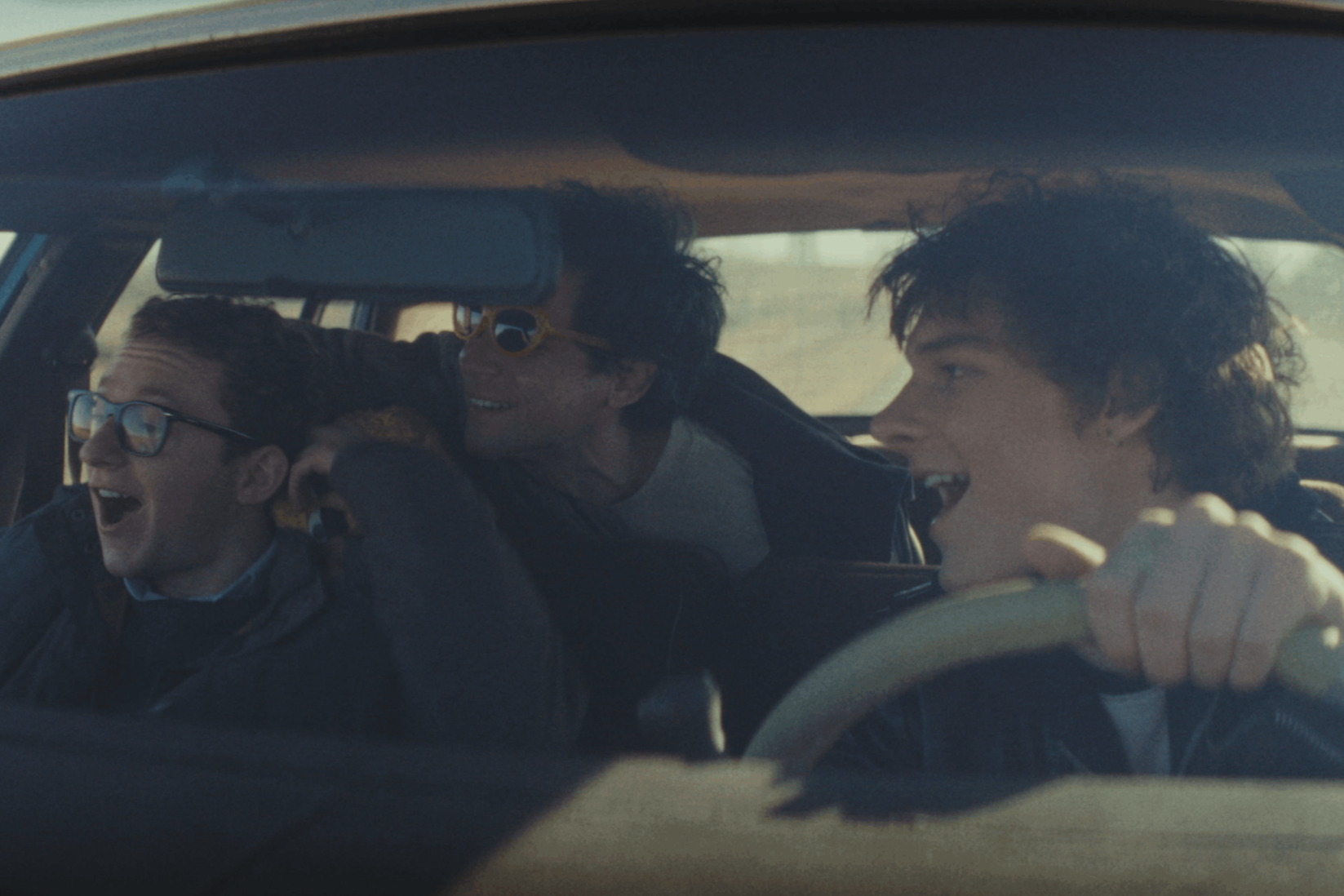
Convinced his life is finally about to change, Tommy steals Wayne's car (a yellow taxi, appropriate enough for an Uber driver), grabs his bandmates and begins the trek from Kansas City to Los Angeles, fueled by adrenaline to reach the supposed Green Day show before midnight a few days later.
What follows is an intentionally chaotic road movie filled with terrible decisions, unlikely encounters, adolescent romance, family baggage and, naturally, a tremendous amount of Green Day.
The concept itself fits the band almost perfectly. Director Lee Kirk developed the film alongside Billie Joe Armstrong, who initially approached him with little more than the desire to make a Green Day movie that ultimately ended at a New Year's Eve concert. From there, the filmmakers pulled inspiration from the youth movies they grew up watching: ‘The Breakfast Club,’ ‘The Goonies,’ ‘Footloose,’ and ‘Ferris Bueller's Day Off’ among them. That DNA is pretty damn apparent.
‘Nimrods’ doesn't feel particularly interested in the clean dramatic machinery of modern studio movies. Instead, it embraces the shaggy looseness of an old-school teenage road comedy, where the destination matters less than the strange characters, arguments, romances and disasters accumulated along the way. The film is messy, but adolescence is messy too.
There is something appropriately teenage about the way ‘Nimrods’ moves. The narrative wanders and the characters make wacky choices. Emotional revelations sit beside absurd comedy, with scenes occasionally feeling more like half-remembered stories from somebody's youth than pieces of an efficiently structured screenplay. That is sometimes frustrating, particularly when the movie loses momentum, but it also feels closely aligned with what Kirk is trying to tell.
Even the film's setting plays into that idea. Although the story unfolds in contemporary America, the characters repeatedly interact with remnants of an earlier era: camcorders, cassette recorders, older cars and other pieces of analogue technology (hence the band name Analog Dogs). It gives ‘Nimrods’ a slightly displaced quality, as though these teenagers could exist almost anywhere between the late '80s and today. The technology changes, but being seventeen doesn't.
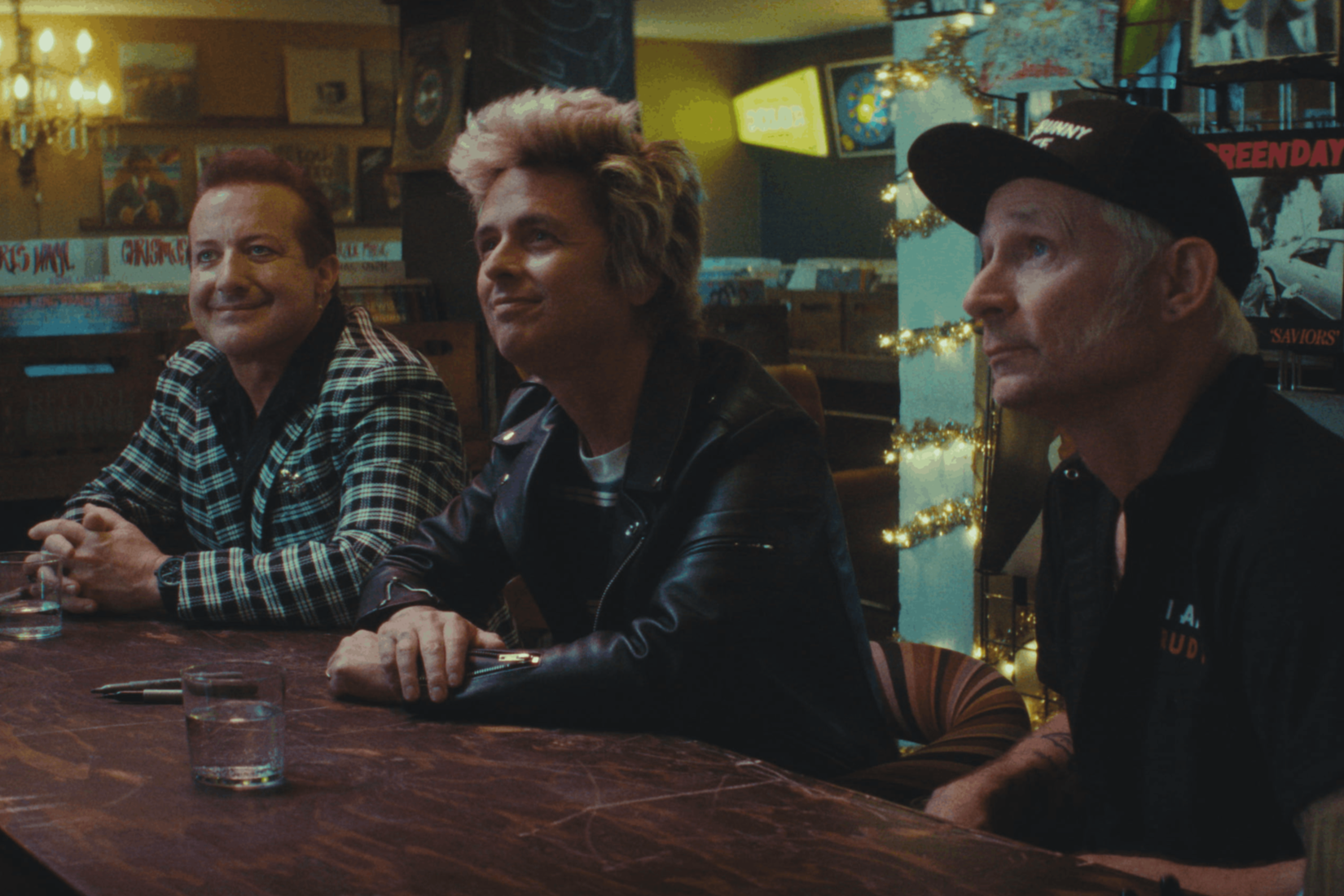
Green Day's own adolescence is embedded throughout the film. Kirk reportedly questioned Armstrong, Mike Dirnt and Tré Cool about their younger years while developing the screenplay, taking anecdotes from their lives and reshaping them into fictional characters and situations.
Tommy's journey echoes aspects of Armstrong's youth — the mixture of personal loss and an overwhelming desire to build a life through music. Knowing Green Day's history makes several moments land differently. What could otherwise resemble generic rock-band mythology instead feels like a fictionalised reflection of the experiences that eventually produced one of the world's biggest punk bands (each member of the core three we follow clearly mirror Green Day’s band members).
Courtesy of Inaugural Entertainment.
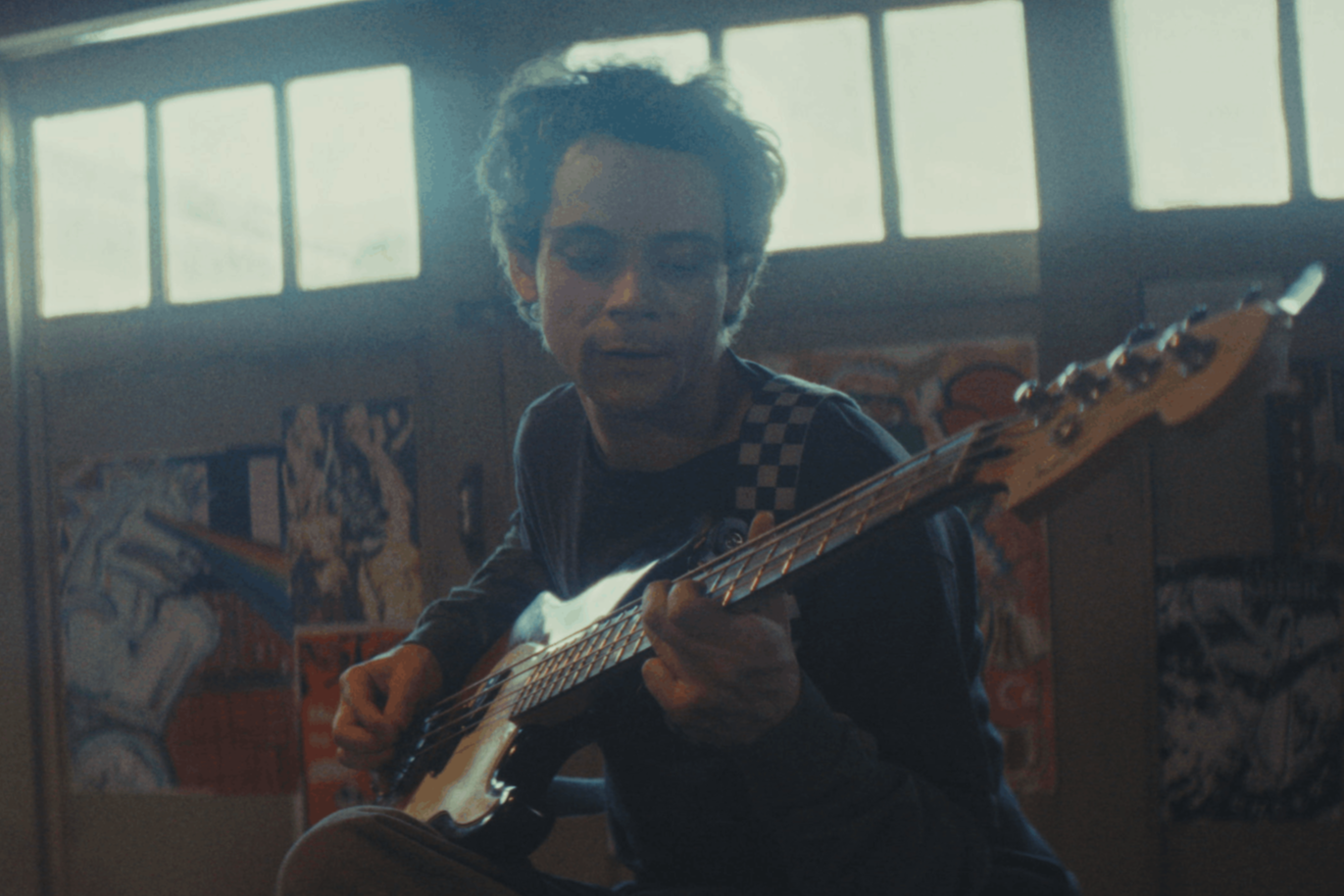
Mason Thames makes Tommy an easy character to follow through all of it. There is a convincing desperation underneath his confidence; he doesn't simply want this Green Day show to be real, he needs it to be real because it represents proof that the life he imagines for himself might actually exist.
His chemistry with Mckenna Grace's Olivia is another strength. The two share an easy warmth that prevents their relationship from feeling like a romance mechanically inserted because a teenage movie requires one. Their quieter scenes provide some necessary sincerity between the movie's louder detours.
Ryan Foust also gets plenty to work with as Chad. Visually, he sometimes resembles someone far more likely to start a Buddy Holly tribute act than join a punk band, but he ultimately sells himself as the group's drummer and becomes an enjoyable part of their dysfunctional little unit.
The standout, however, is Kylr Coffman as Fred. Coffman throws himself into practically every scene. Fred could easily have been reduced to the eccentric friend whose primary purpose is generating chaos, but Coffman gives him significantly more personality than that. He’s funny, unpredictable and occasionally vulnerable, bringing the sort of lived-in energy that makes you believe these teenagers actually spend time together when the camera isn't watching. The mushroom trip sequence is where Coffman particularly shines.
What begins as another ridiculous road-trip complication gradually allows him to demonstrate considerably more range, playing Fred's psychedelic unraveling with enough commitment that the scene becomes more than a throwaway drug joke. It's one of the performances that remains memorable after the movie ends, and Coffman deserves much of the credit for making Fred the film's most entertaining character.
Meanwhile, the older ensemble clearly understands exactly what kind of movie they have entered.
Jenna Fischer and Angela Kinsey both do the job comfortably, and seeing the pair together inevitably creates the suspicion that someone involved with ‘Nimrods’ has spent a considerable amount of time watching ‘The Office’ (or it could be the fact that Jenna Fischer is married to the director).
Bobby Lee and Fred Armisen are reliably hilarious whenever they appear, while Sean Gunn arguably walks away with the movie's funniest individual gag through his turn as a drunken “mechanic.”
There is even a welcome appearance from The Paradox, one of those small inclusions that may pass casual audiences by but should immediately put a smile on the faces of music fans paying attention.
On a technical note, ‘Nimrods’ isn’t hitting home as much. David Robert Jones' cinematography is perfectly functional but rarely striking. There aren't many compositions or individual shots that linger once the movie is over.
There is a handmade quality running through ‘Nimrods,’ and overly polished cinematography might have worked against the garage-band spirit Kirk appears to be chasing. The movie frequently looks more like somebody documented an adventure than meticulously photographed one.
There is relatively little traditional scoring throughout ‘Nimrods’ (as expected), with Alec Puro's original score mostly filling the spaces between larger musical moments. Instead, Green Day's own catalogue effectively becomes the film's score and driving force. For longtime fans, that's a win.
The band's music floods the movie, appearing in expected and sometimes surprisingly playful ways. Casual audiences may eventually feel the needle drops becoming excessive, but when the movie has so openly positioned itself as a celebration of Green Day, pretending otherwise would almost feel dishonest.
Courtesy of Inaugural Entertainment.
‘Nimrods’ completely embraces the Green Day fandom. That becomes even more evident when the story finally reaches its destination.
Without revealing precisely how the circumstances resolve themselves, the ending cleverly delivers the best of both worlds. The film achieves the emotional payoff of Tommy reconnecting with what really matters — particularly family — while still fulfilling the fantasy that has driven him across the country in the first place. Family bonding and living the dream somehow coexist.
Underneath all the punk music, mushroom trips, stolen cars and ridiculous detours, ‘Nimrods’ has a thread of sincerity throughout. It’s about refusing to let other people determine the boundaries of your life. It encourages people of all ages to take risks, have fun, be bold enough to look stupid and brave enough to fail. This also includes a big theme of figuring out who you are rather than allowing everyone else to decide for you.
There is an argument that seasoned critics, or viewers without any attachment to Green Day, could reasonably come away with a lower rating: the plot is conventional, the structure wanders, the visuals do the bare minimum, the filmmaking frequently chooses enthusiasm over refinement. But evaluating ‘Nimrods’ through those shortcomings misses some of its purpose.
Before Dookie, before stadiums, awards and decades of international success, Billie Joe Armstrong, Mike Dirnt and Tré Cool were young musicians driving around, playing wherever somebody would let them and pursuing a version of adulthood that probably looked ridiculous to plenty of people around them. ‘Nimrods’ successfully transforms that spirit into a fictional teenage adventure.
It's a Green Day movie made by people who love Green Day, taking the band's own experiences for generations of fans who have found some part of themselves in their music.
For a Green Day fan, it's difficult not to enjoy the ride.
Our score: ★★★★☆
MORE NEWS