Namit Malhotra on Building India’s “Avatar” Moment With ‘Ramayana’
Interview conducted and article written by Nik Mohan
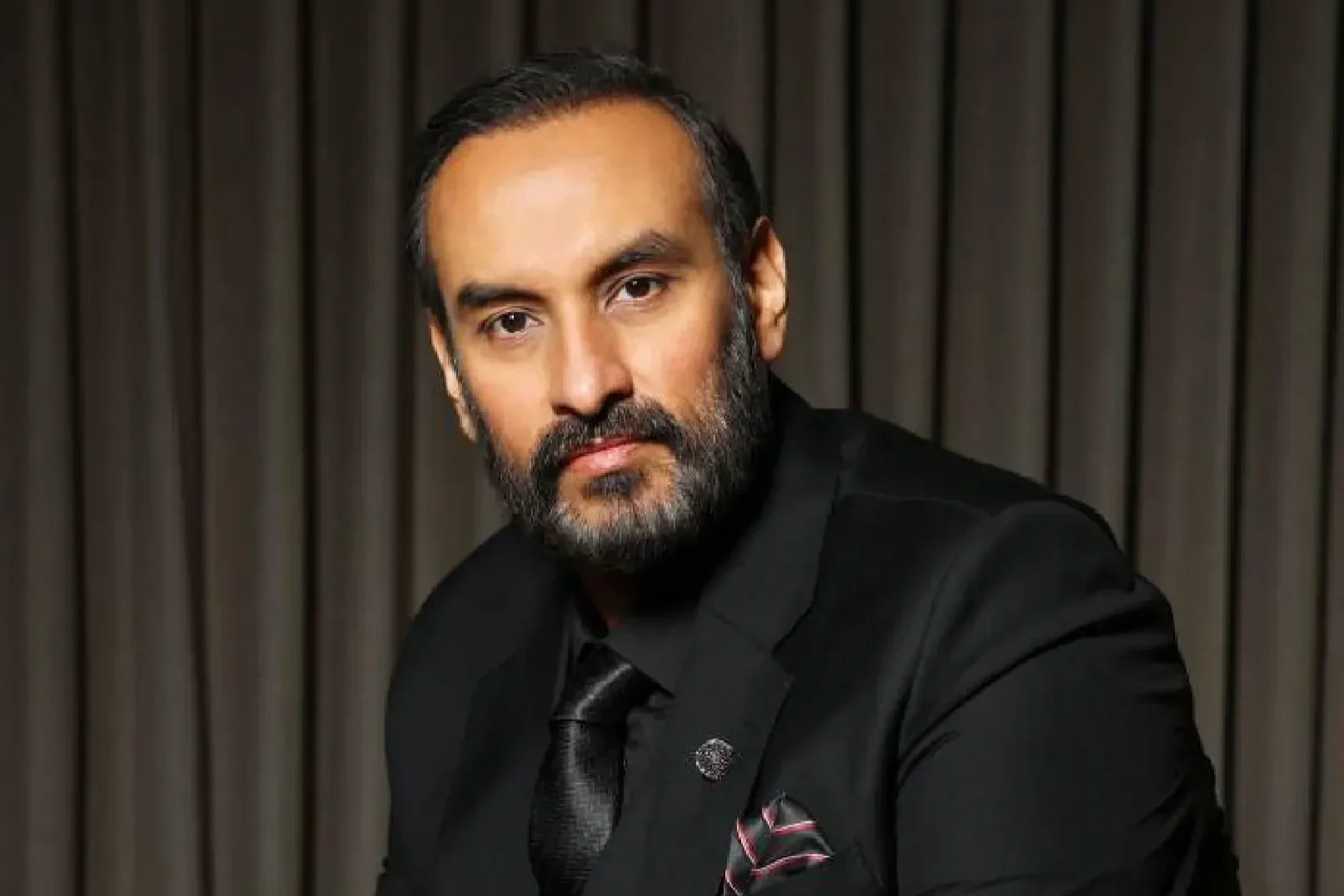
Courtesy of DNEG.
For decades, Indian mythology has been retold on screen in forms both reverent and spectacular, but Namit Malhotra’s ‘Ramayana’ is being positioned as something more ambitious: a bid to take one of the world’s oldest and most widely recognised epics into the language of contemporary global event cinema. Mounted as a two-part, IMAX-scale production with a reported investment of up to $500 million, the film arrives not simply as another adaptation of a sacred story, but as a statement of intent about the future of Indian storytelling on the world stage.
Malhotra, the founder of DNEG, the UK-headquartered visual effects powerhouse behind Oscar-winning work on films including ‘Interstellar,’ ‘Dune,’ and ‘Oppenheimer’ is now stepping into a different kind of role: not just helping Hollywood imagine the impossible, but producing a story rooted in India’s cultural imagination for an international audience. With Nitesh Tiwari directing, Ranbir Kapoor taking on the role of Rama, and Hans Zimmer and A.R. Rahman collaborating on the score, ‘Ramayana’ is being framed by its makers as a potential “India’s Avatar” moment. In conversation, Malhotra speaks about scale, responsibility, faith, technology, and what it means to tell a story that belongs to billions — while trying to make it feel newly cinematic.
Rama’s story has endured for thousands of years. How did the decision to bring this epic tale to the big screen manifest?
Namit: It’s fair to say that ‘Ramayana’ is timeless—Lord Ram is timeless, so there’s never a perfect time. For us, as we built ourselves up from this little Indian startup [DNEG] into a global end-to-end visual effects and animation company, it started to feel that it was about time that we were able to find some stories that represented India and India storytelling at a level and scale that was unique… The fact that I’d spent my 30 years in building this infrastructure, I felt like what’s the best way to do something that leverages what we have and how do we position India and our ability to tell stories at the highest level?
Why was now the right moment to place ‘Ramayana’ on this global scale, and as a two-part cinematic event rather than a single film?
Namit: The best example of the ‘Ramayan’ is the TV show that came in the 80s—it was on national television for years. If you look at the scale and scope, we had to work very hard to bring it into two parts. In an ideal world, we were trying to do it in three parts.
For viewers who did not grow up with this story, what is the entry point into this world — what are the universal themes in ‘Ramayana’ that can resonate just as powerfully in Los Angeles or London as they do in India?
Namit: The themes of all stories are are similar. It’s always trying to establish a sense of morality or humanity or the way we are all perceived in the world of our own differences or culture, and how do we connect from one common emotion? That’s what ‘Ramayana’ represents to me and why it continues to be so relevant to people… The fact that it [‘Ramayana’] presents different philosophies and perspectives in such a manner that even though it’s a story over 5000 years old, it still feels very relevant in the world we live in today.
Do you feel the pressure to deliver a story like this to the world?
Namit: It’s fair to say that we’ve been conscious of the responsibility that we carry. I don’t think there’s anyone on the team who is unaware of that. We’re all fellow Indians, we have our own families that care deeply about this aspect. So we are very, very careful and ensuring what we bring to the world has the blessings of all the people that are emotionally invested in it.
Namit: The way the teams have been collaborating—whether they’re from the East or the West—I think they’re all giving it their one-hundred percent. So it’s a great moment to sit back and see how it’s all coming together.
Casting Ranbir Kapoor as Rama is a huge decision. What made you feel he could embody not just the strength, but also the moral clarity of Ram?
Namit: It’s fair to say that he [Kapoor] has put every aspect of himself to the test to make sure he can live and breath the character that’s been laid-out by Nitesh and the team, in a way that one can’t imagine anyone else doing justice to.
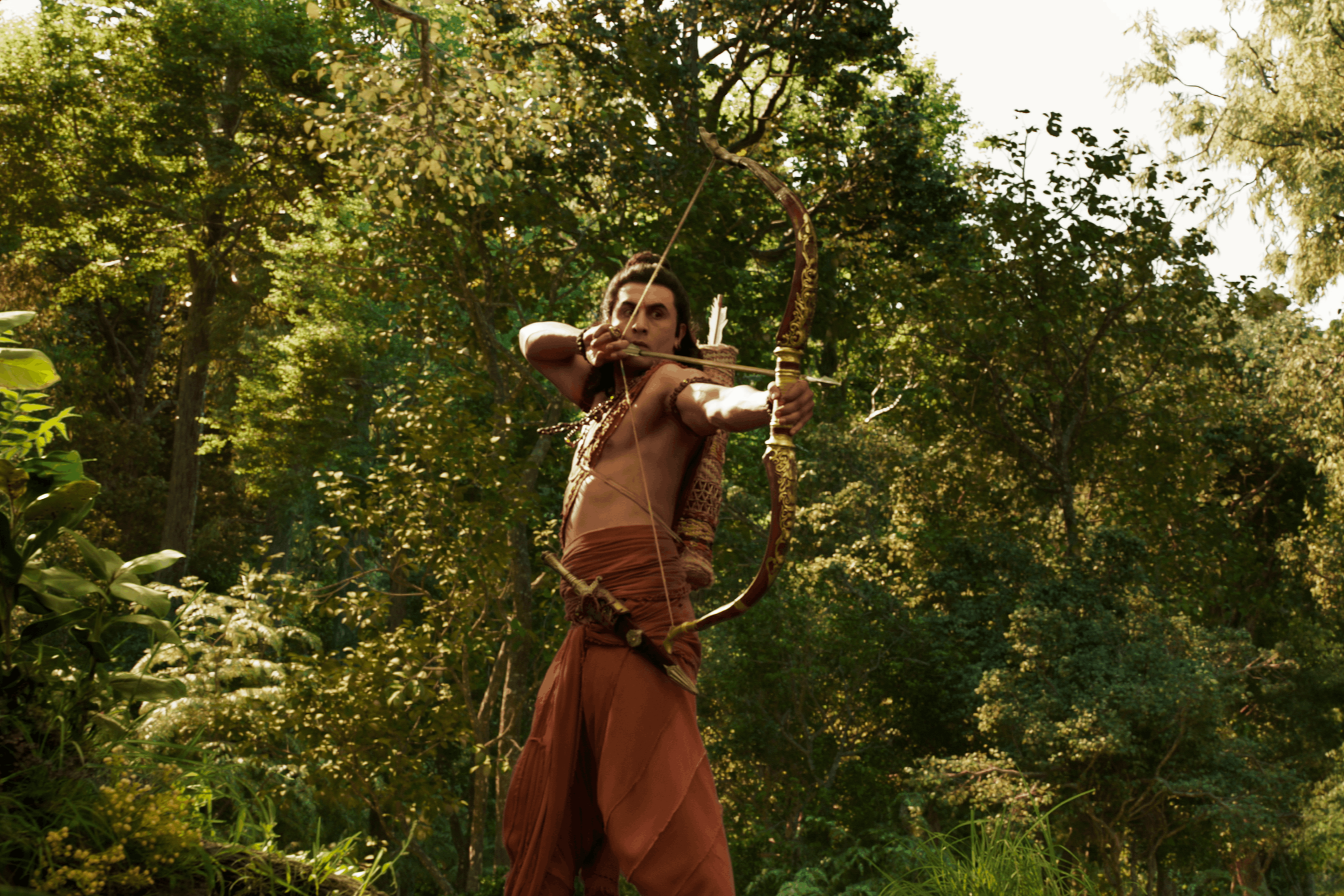
Ranbir Kapoor as Rama. Courtesy of Prime Focus Studios.
What was your pitch to Hans Zimmer and A. R. Rahman—bringing these two titans of the industry together? Why did you feel this was the musical pairing the film needed?
Namit: This is the easiest answer. As a fanboy myself, I grew up on listening to A. R. Rahman songs in India. Then when I moved to Hollywood, I spent a good number of years listening to Hans’ scores. For me, both these fine gentlemen are true legends and I actually love their music personally. So when ‘Ramayana’ was coming together, it was the aspiration that if I could bring the two together, I’d be able to bring somebody from the East and the West together in a way that would do real justice to the Ramayan.
Namit: A. R. [Rahman] did not need an introduction to the Ramayan, and he was very excited. When I went to Hans, it was a very interesting meeting. I was out there in my first meeting with my presentations and a whole pitch on what is the Ramayan, why it’s so important—what it means to the people of India. And he just said one thing to me which stayed with me. He said; Namit, something that’s survived the test of the time for thousands of years and continues to be relevant, if not grown in its importance, who are you and I to question it? We should do it with the greatest amount of reverence.
You’ve spent years building world-class VFX companies. On ‘Ramayana,’ how did you make sure technology served emotion and faith, rather than overwhelming them?
Namit: Visual effects is a tool in the hands of any filmmaker. You have a certain visual or idea and you need the help of VFX as a department to come in and make that happen. So whether it’s Nitesh or Christopher Nolan or Denis Villeneuve, our role as a visual effects partner always remains the same; a solution to their vision. We’re fitting where their vision is at to make sure we become part of that team and process. That’s something DNEG has done incredibly well over its entire lifecycle. When it came to ‘Ramayana,’ it was about bringing these fantastical worlds and fantastical creatures with a certain sense of authenticity to the world.
What do you hope ‘Ramayana’ changes about how the world sees Indian stories—and how India sees the global potential of its own epics?
Namit: The goal of ‘Ramayana’ for me was to bring a genuine collaboration between the East and the West. What comes on the back of ‘Ramayana’ hopefully is the excitement the world should have to say hey, how do we bring the best in the world with India together to tell more compelling, more interesting stories? When you think about it from the average Indian standpoint, I think we’re right there on the world stage. I feel in the movies and storytelling, we have the skillset and maturity to be able to deliver world-class experiences. Our stories and our ability to make that happen should bring a lot of pride and confidence to people in India who love our stories and love our industry, but haven’t seen it at that global level.
Filmed for IMAX screens, ‘Ramayana’ releases November 8, 2026
MORE NEWS