‘Disclosure Day’ Review: Steven Spielberg is Back to his Sci-Fi Best With an Energetic Spectacle
Review by Kevin Ward
Courtesy of Universal Pictures.
Steven Spielberg’s ‘Disclosure Day’ is the kind of movie people keep saying Hollywood doesn’t make anymore: huge, sincere, tense, emotionally loaded, and actually interested in something beyond franchise management. It’s a conspiracy thriller, an alien-contact movie, a chase film, and a summer blockbuster with a conscience. That’s a lot to juggle, but Spielberg is one of the few filmmakers alive who can make that kind of tonal high-wire act look effortless.
At first, the film feels like Spielberg doing his version of a ‘70s paranoia thriller. Think ‘Three Days of the Condor,’ and the kind of movie where every government building seems to have twelve secret basement levels and every man in a suit looks like he knows too much. There’s also a stripped-down pursuit-movie energy that reaches back to Spielberg’s earliest work; a clean, forward momentum that never looks back.
But ‘Disclosure Day’ is not just Spielberg playing with old-school thriller grammar. It’s also him returning to the big questions that have been sitting inside his work for decades. What happens when we realize we are not alone? Who gets to control that information? Can truth survive when powerful institutions decide people are too fragile, too divided or too useful to be told the whole story?
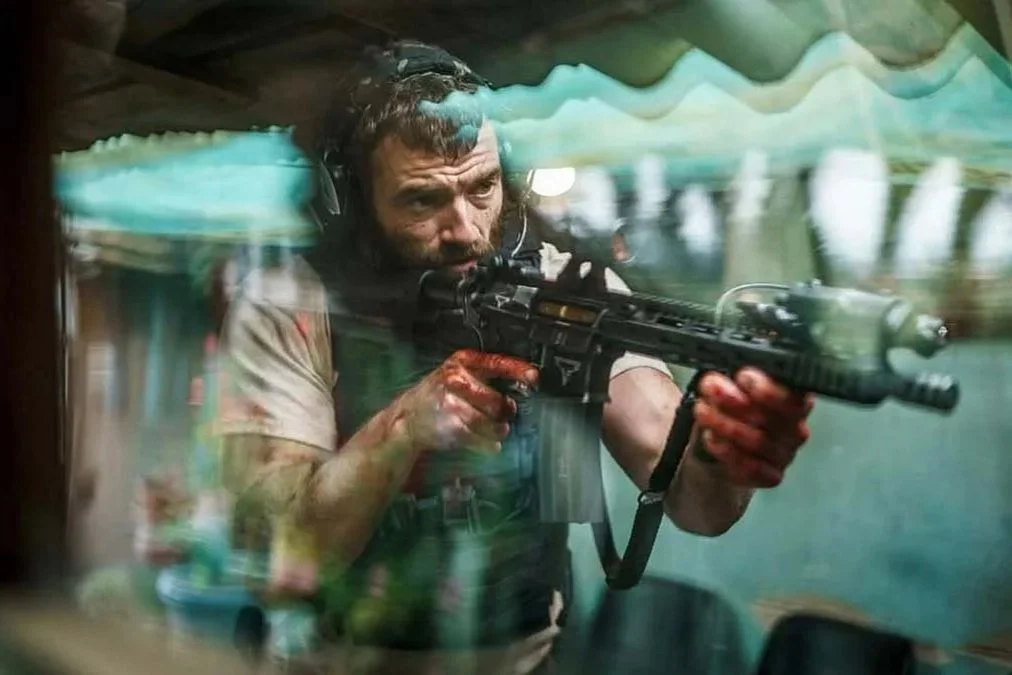
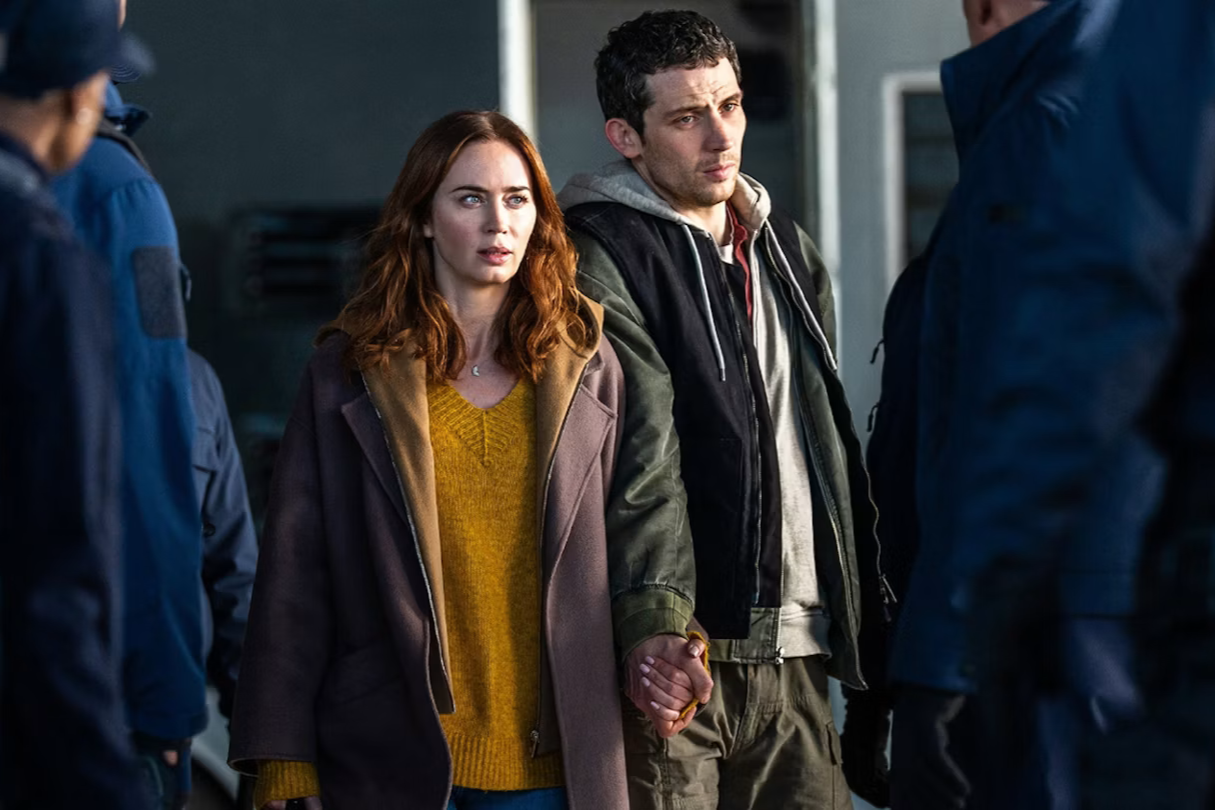
The plot kicks off with Daniel Kellner, played by Josh O’Connor, a former hacker turned cybersecurity specialist for WARDEX, a shadow agency dedicated to hiding evidence of UAPs and alien contact. Daniel has seen too much, and he’s done helping the machine keep it quiet. So he steals classified files, video evidence and a mysterious alien-derived device, then goes on the run with Jane Blankenship, played by Eve Hewson, a former nun whose faith has curdled into something more complicated but no less powerful.
Hunting them is Noah Scanlon, played by Colin Firth, the head of WARDEX. Scanlon is not written as a mustache-twirling villain, which is a relief. He’s scarier than that. He’s one of those men who has convinced himself that control is compassion. In his mind, disclosure would wreck society, so any cruelty committed in the name of secrecy becomes acceptable. Firth plays him with icy authority, letting just enough doubt and self-righteousness leak through the cracks.
Running parallel to Daniel’s story is Margaret Fairchild, played by Emily Blunt, a Kansas City TV meteorologist whose life suddenly starts glitching in ways she cannot explain. A red cardinal appears in her apartment. She starts speaking languages she doesn’t know. During a live weather segment, she freezes and emits strange, clicking sounds that seem like nonsense to everyone except Daniel, who recognizes them as code.
That mystery: why Daniel and Margaret are connected, what their abilities mean, and why WARDEX is desperate to contain them? This acts as the movie’s emotional engine. Spielberg and screenwriter David Koepp do a smart thing here: they don’t over-explain too early. The audience is left to assemble the pieces along with the characters, which gives the film a nice analog-thriller pleasure. You’re not just watching lore get dumped; you’re decoding behavior, images, sounds and half-buried trauma.
The movie is very much in conversation with ‘Close Encounters of the Third Kind’ and ‘E.T.,’ but this is not Spielberg simply remixing his greatest hits. The wonder is there, but it’s older now. More bruised. In ‘Close Encounters,’ looking up felt like an act of belief. In ‘Disclosure Day,’ looking up is also a political act.
That might sound heavy, but the film absolutely moves. Spielberg still understands action better than almost anyone. Not because he cuts fast or throws noise at the screen, but because he always knows where the bodies are in space, what the characters want, and what each beat of movement means. A car-to-train chase involving Daniel and Margaret is the obvious showstopper, and it’s staged with the kind of geographic clarity that makes modern action feel lazy by comparison. There’s also a farmhouse sequence in West Virginia that is pure tension architecture: blocking, silence, eyelines, delayed information, release.
This is where Spielberg’s technical control really flexes. Janusz Kaminski shoots the film in a muted, slightly desaturated palette that fits the paranoia-thriller mode, but he keeps piercing the grayness with these pockets of almost religious light. Sarah Broshar’s editing has serious momentum without becoming chaotic. John Williams’ score is massive when it needs to be, but what’s striking is how often it holds back just long enough to let dread or awe creep in naturally. Adam Stockhausen’s production design also deserves a shout, especially the WARDEX interiors and a late-film television control room sequence that turns broadcast infrastructure into a kind of cinematic cathedral.
The performances keep all of this grounded. Josh O’Connor is excellent as Daniel, bringing that raw, open-nerved quality he does so well. He makes Daniel feel brilliant but not slick, frightened but not weak. Emily Blunt is even better. Margaret could have become a collection of sci-fi symptoms — speaking in strange languages, losing time, receiving signals — but Blunt plays her as a woman whose body and mind have become battlegrounds. She’s scared, furious, confused and eventually devastatingly focused. It’s one of her richest performances.
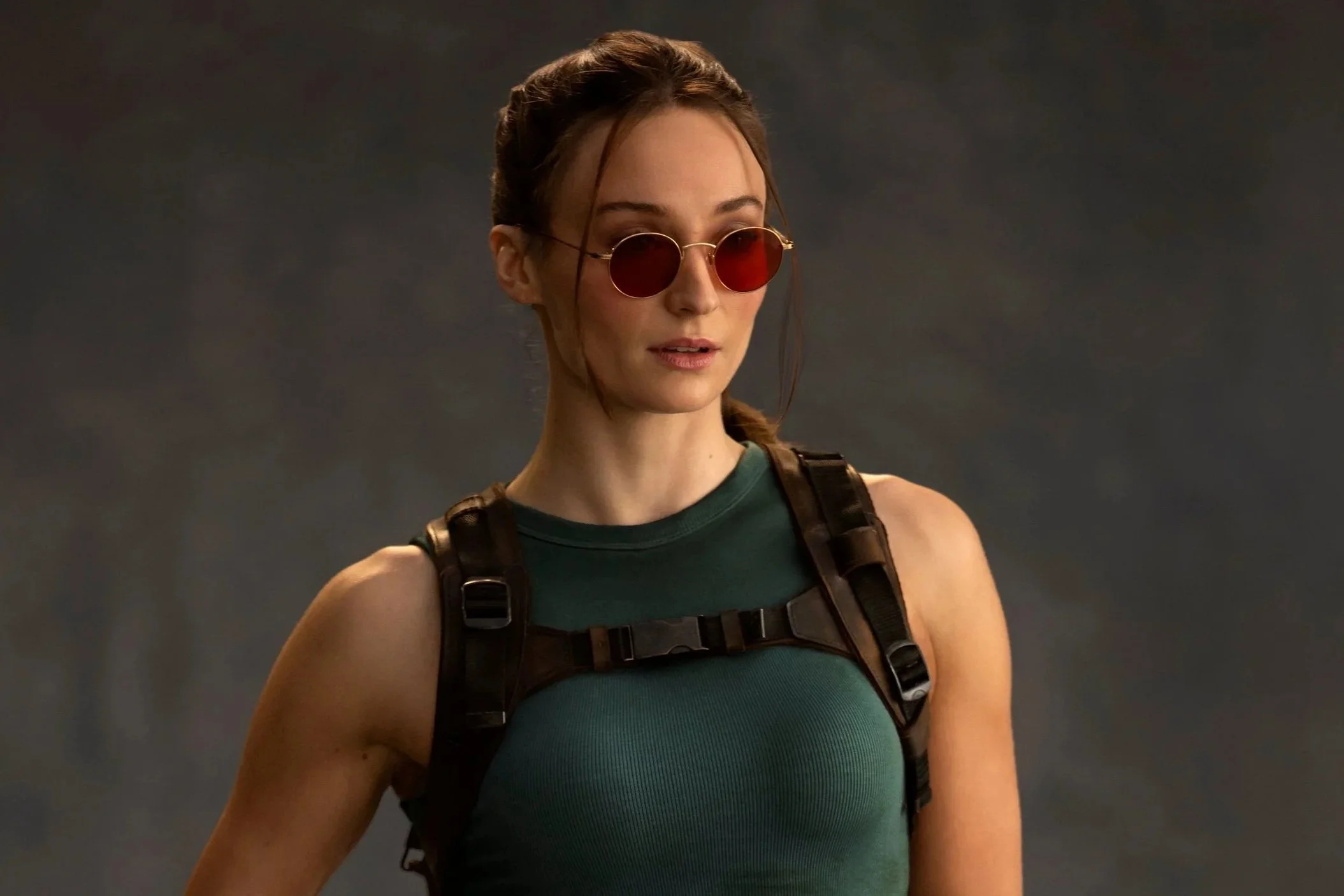
Colman Domingo gives the movie its soul as Hugo Wakefield, a former WARDEX believer who now helps Daniel and Margaret understand what they’re carrying. Domingo has a way of making exposition feel like confession, and Spielberg uses that beautifully. Eve Hewson brings warmth and gravity to Jane, whose background as a former nun gives the movie its clearest line into faith without turning it into a sermon. Wyatt Russell, as Margaret’s boyfriend Jackson, gets the tricky job of playing the guy who is supportive right up until reality becomes too strange to process, and he gives the role more texture than expected.
The film is not flawless. The idea that alien presences can appear through familiar animals gets dangerously close to being too cute, and one or two CG moments feel less elegant than the movie around them. The global nuclear-crisis backdrop is also oddly quiet for something so massive, tucked into news reports and background tension when it maybe could have used a little more narrative pressure.
‘Disclosure Day’ works because Spielberg understands that spectacle only lasts when it is attached to feeling. The movie has aliens, secret agencies, psychic technology, car chases and world-ending stakes, but what it’s really about is trust. Trusting people with the truth. Trusting wonder after cynicism has done its damage. Trusting that empathy might still be a survival skill rather than a weakness.
For a filmmaker who has spent more than fifty years asking what waits beyond the horizon, Spielberg sounds surprisingly urgent here. ‘Disclosure Day’ isn’t just him returning to familiar territory, it feels like him revisiting that territory with everything he has learned about power, fear, grief, belief and the hope that people might still choose connection over control.
It’s big, messy in the right ways, beautifully built and emotionally sincere without apology. In other words: Spielberg is back in the sky, but this time he’s asking who gets to decide whether the rest of us are allowed to look up.
Our score: ★★★★☆